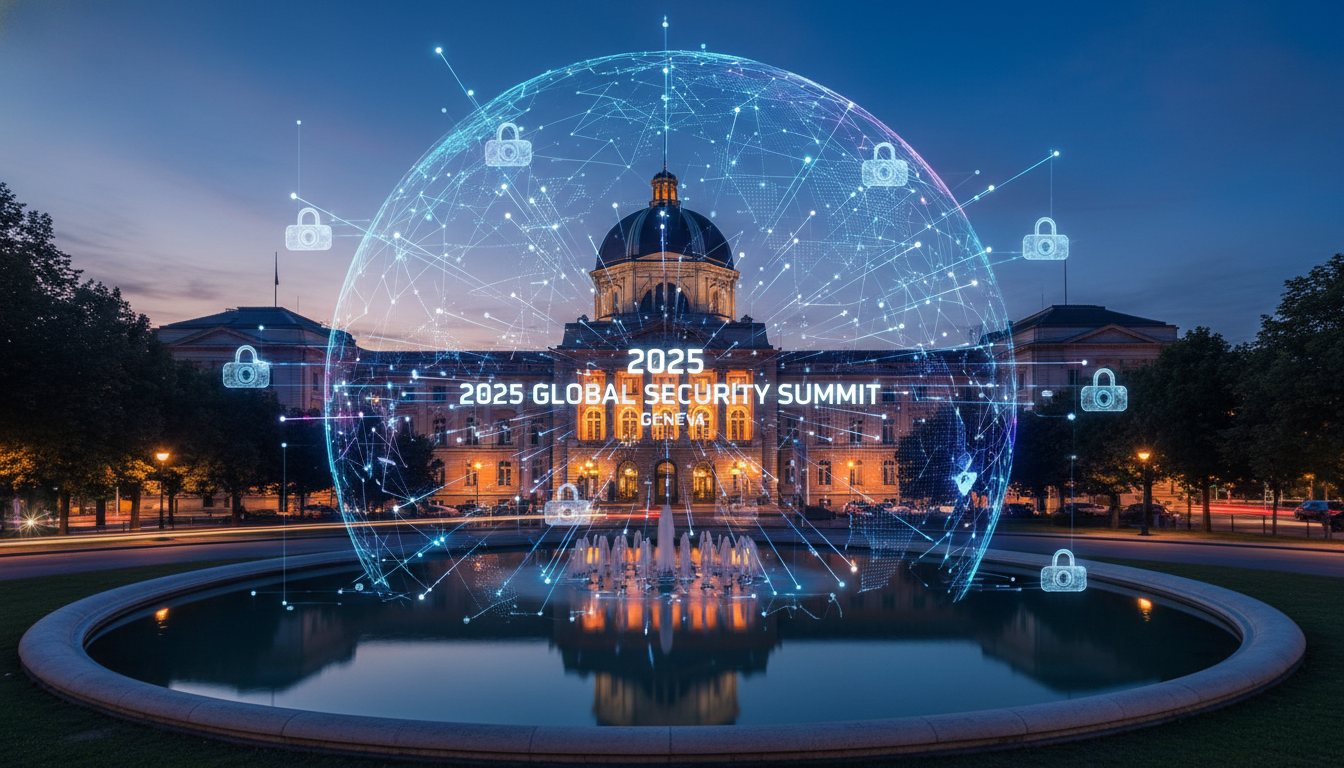
The Global Security Summit Geneva has concluded its December 2025 session, marking what many diplomats describe as a pivotal shift in the trajectory of international relations. Against a backdrop of extreme geopolitical fracture, the gathering brought together representatives from the world’s foremost nuclear and technological powers to address a landscape of risk that has reached levels of volatility not seen since the height of the twentieth century. While the primary objective of the summit was to de-escalate immediate military tensions, the resulting Geneva Accord has introduced a broader strategy that integrates traditional nuclear disarmament with the burgeoning challenges of the digital age.
The atmosphere in Geneva during the closing weeks of 2025 was one of cautious optimism tempered by the hard realities of current state-based conflicts. For the first time in recent history, major powers have moved beyond rhetorical commitments to establish a framework for transparency that accounts for both the physical and the virtual battlefields. The emergence of the Geneva Spirit represents an attempt to salvage multilateralism at a time when unilateral actions and regional alliances seemed poised to override global security norms. This summit was not merely a reaction to current crises but a proactive attempt to define the rules of engagement for a decade that will be increasingly defined by artificial intelligence and autonomous systems.
A New Era of Nuclear Verification and Transparency
A central pillar of the Geneva Accord is its renewed focus on nuclear verification and transparency. In the years leading up to 2025, the international community witnessed a steady unraveling of Cold War-era arms control treaties, leading to a period of rapid nuclear proliferation and modernized testing. The 2025 framework seeks to reverse this trend by establishing a modern verification regime that utilizes decentralized data and satellite-based monitoring to ensure compliance.
Signatories have committed to a new set of protocols for the notification of missile tests and warhead deployments. This transparency is intended to reduce the risk of miscalculation, which has become a primary concern as hypersonic technologies and shorter flight times diminish the window for diplomatic intervention during a crisis. Experts at the summit emphasized that the lack of clear communication channels had created a dangerous vacuum. By formalizing these verification steps, the Geneva Accord aims to restore a measure of predictability to global nuclear posturing.
The verification mechanisms introduced are designed to be more resilient than their predecessors. They include provisions for multi-lateral oversight, ensuring that the burden of proof does not rest solely on bilateral agreements between the largest powers. This inclusive approach reflects the 2025 reality where secondary powers and regional actors play a larger role in the global strategic balance. However, the true test of these protocols will lie in the willingness of nations to grant access to international inspectors during times of localized friction.
The No First Use Policy for Cyber Warfare
Perhaps the most groundbreaking achievement of the Global Security Summit Geneva is the formal adoption of a
policy regarding cyber-attacks on critical civilian infrastructure. As the world has become increasingly reliant on interconnected digital systems, the boundary between military and civilian targets has blurred. The Geneva Accord specifically identifies power grids, water supplies, and financial systems as protected zones that must remain immune from state-sponsored cyber offensives.
This policy comes at a time when cyber-attacks have moved from the periphery of warfare to the center of national strategy. By agreeing to refrain from the initial use of cyber weapons against these targets, signatories are attempting to prevent the total collapse of societal functions during a conflict. The agreement acknowledges that a single well-placed digital exploit in a national power grid can result in catastrophic loss of life and economic devastation, often far exceeding the impact of conventional weapons.
The inclusion of financial systems in this treaty is particularly notable. In 2025, the global economy is more integrated than ever, with real-time settlement systems and digital assets forming the backbone of international trade. A targeted attack on a major financial hub could trigger a global contagion, leading to the rapid erosion of wealth and public trust. The Geneva Accord seeks to insulate these vital structures from the fluctuations of geopolitical competition, treating them as global commons that must be preserved for the stability of the entire international system.
Artificial Intelligence as the New Frontier of Competition
The rise of artificial intelligence has fundamentally altered the nature of global competition, and the Geneva Accord represents the first major attempt to govern its military applications. AI is no longer a futuristic concept but a present reality that dictates the speed of decision-making on the battlefield. The summit participants recognized that the rapid advancement of AI-driven systems could lead to a new arms race that outpaces current legal frameworks.
The accord introduces a set of ethical guidelines for the use of AI in defense, emphasizing the importance of human oversight. There is a growing consensus that
must be maintained over any system capable of lethal force. As algorithms become more sophisticated, the risk of automated escalation—where two AI systems respond to one another faster than a human can intervene—has become a top priority for security experts.
Furthermore, the Geneva Accord addresses the issue of AI-generated misinformation and its role in destabilizing international relations. State actors have increasingly used deepfakes and algorithmic manipulation to influence public opinion and sow discord within adversary nations. The agreement calls for greater cooperation in identifying and attributing these digital influence operations, though critics point out that the clandestine nature of these activities makes enforcement exceptionally difficult.
State-Based Armed Conflict: Ranking the Global Risks
As we transition into 2026, state-based armed conflict has reclaimed the top spot in global risk assessments. This represents a significant shift from previous years where environmental and economic risks were often viewed as more immediate. The resurgence of traditional warfare between nations, often exacerbated by proxy involvement, has created a sense of systemic instability that the Global Security Summit Geneva sought to address.
The 2025 landscape is characterized by a series of interconnected regional conflicts that threaten to spill over into global confrontations. From Eastern Europe to West Asia, the proliferation of sophisticated weaponry and the breakdown of traditional diplomacy have made the prospect of a large-scale war more plausible than at any point in the last three decades. The Geneva Accord acknowledges this reality by creating new mechanisms for de-escalation and crisis management.
This focus on state-based conflict also reflects the changing nature of the global order. The shift toward a multi-polar world has led to a more competitive international environment where nations are more willing to use force to achieve strategic objectives. The accord attempts to mitigate this by reinforcing the principles of sovereignty and the peaceful resolution of disputes, as outlined in the United Nations Charter, while adapting those principles to the technological realities of 2026.
- 01
- 02
- 03
- 04
The Challenges of Enforcement and Verification
While the Geneva Accord has been hailed as a landmark achievement, experts warn that the lack of a robust enforcement mechanism remains a significant hurdle. International agreements are only as strong as the willingness of their signatories to abide by them, and history is replete with examples of treaties that were ignored when they became inconvenient. In the context of cyber and nuclear security, the stakes are so high that any breach of trust could have immediate and irreversible consequences.
One of the primary difficulties in enforcing the cyber
policy is the challenge of attribution. Cyber-attacks are often launched through complex networks of proxies and non-state actors, making it difficult to definitively link an attack to a specific government. Without a clear and undisputed way to attribute these actions, the agreement risks becoming a set of voluntary guidelines rather than a binding treaty.
Similarly, the verification of nuclear transparency relies on the cooperation of nations that may be hesitant to share sensitive military information. The Geneva Accord attempts to overcome this by introducing decentralized verification technologies, but the political will to implement these systems consistently across all signatories remains to be seen. As we move into 2026, the international community will be watching closely to see if the rhetoric of the summit is matched by concrete actions on the ground.
Regional Conflicts and the Test of the Geneva Spirit
The true test of the
will not occur in the halls of diplomacy but in the active theaters of regional conflict. Ongoing tensions in various parts of the world provide a constant challenge to the ideals of the Geneva Accord. For the agreement to be effective, it must be able to influence the behavior of nations even in the midst of intense localized hostilities.
Regional actors who were not central to the negotiations in Geneva nevertheless play a crucial role in global security. The accord includes provisions for expanding the signatory base and encouraging non-participating nations to adopt similar standards of transparency and restraint. This is particularly important in regions where the presence of autonomous weapons and cyber warfare capabilities is rapidly increasing.
The ability of major powers to exert influence over their regional partners will also be a key factor. If the signatories of the Geneva Accord continue to support proxies who engage in the very behaviors the treaty seeks to ban, the agreement’s credibility will be undermined. The integration of the accord’s principles into regional security architectures is a necessary step for its long-term success.
Autonomous Weapons Systems and the 2026 Outlook
Looking forward to 2026, the advancement of autonomous weapons systems remains one of the most pressing concerns for international security. These systems, which can select and engage targets without human intervention, represent a fundamental change in the ethics and practice of warfare. While the Geneva Accord provides a preliminary framework for governance, more specific and legally binding regulations are needed.
The debate over
(LAWS) has been ongoing for years, but the technology has now reached a point of maturity that demands urgent action. The 2025 summit established a working group to develop more detailed protocols for these systems, with a goal of reaching a comprehensive agreement by the end of 2026. This deadline reflects the growing sense of urgency among nations that fear an unregulated proliferation of autonomous technology.
The primary concern is the potential for these weapons to lower the threshold for conflict. By removing the immediate risk to human soldiers, autonomous systems may make the decision to go to war more attractive for political leaders. Furthermore, the lack of accountability for decisions made by machines remains a major legal and moral dilemma. The international community must grapple with these questions as autonomous platforms become a standard part of modern military inventories.
Economic Implications for Financial and Power Systems
The Geneva Accord’s focus on protecting civilian infrastructure has significant implications for the global economy. By securing financial systems and power grids from first-strike cyber-attacks, the agreement provides a layer of stability for international markets. Investors and businesses have long expressed concern about the potential for a
to disrupt global supply chains and financial liquidity.
The assurance that major powers will refrain from targeting these systems helps to mitigate one of the most significant tail risks facing the global economy. In an era of high volatility and geopolitical uncertainty, this predictability is highly valued. The accord also encourages greater cooperation between the public and private sectors in building resilient infrastructure that can withstand attacks from non-state actors or rogue elements.
Furthermore, the protection of power grids is essential for the continued development of the digital economy. As more nations transition to renewable energy sources and smart grid technologies, the vulnerability of these systems to cyber interference increases. The Geneva Accord recognizes that energy security is a prerequisite for both national stability and global economic growth.
Conclusion: The Roadmap for Global Stability in 2026
The Global Security Summit Geneva has provided a roadmap for navigating the complex challenges of the coming year. By integrating nuclear transparency, cyber restraint, and AI governance into a single framework, the Geneva Accord acknowledges the interconnected nature of modern security. However, the success of this strategy will depend on the continued commitment of the international community to the principles of multilateralism and mutual restraint.
As we enter 2026, the
faces a world that is still deeply divided. The rapid advancement of technology and the persistence of regional conflicts will continue to put pressure on the fragile peace established in Geneva. Yet, the existence of a shared framework for verification and de-escalation provides a foundation upon which a more stable world order can be built.
The road ahead is fraught with difficulty, but the Geneva Accord represents a necessary step toward a future where technology is used to enhance rather than undermine global security. The lessons learned in 2025 will be vital as nations continue to adapt to a world where the lines between the physical and the digital, the civilian and the military, and the human and the machine are increasingly blurred.
0 Comments