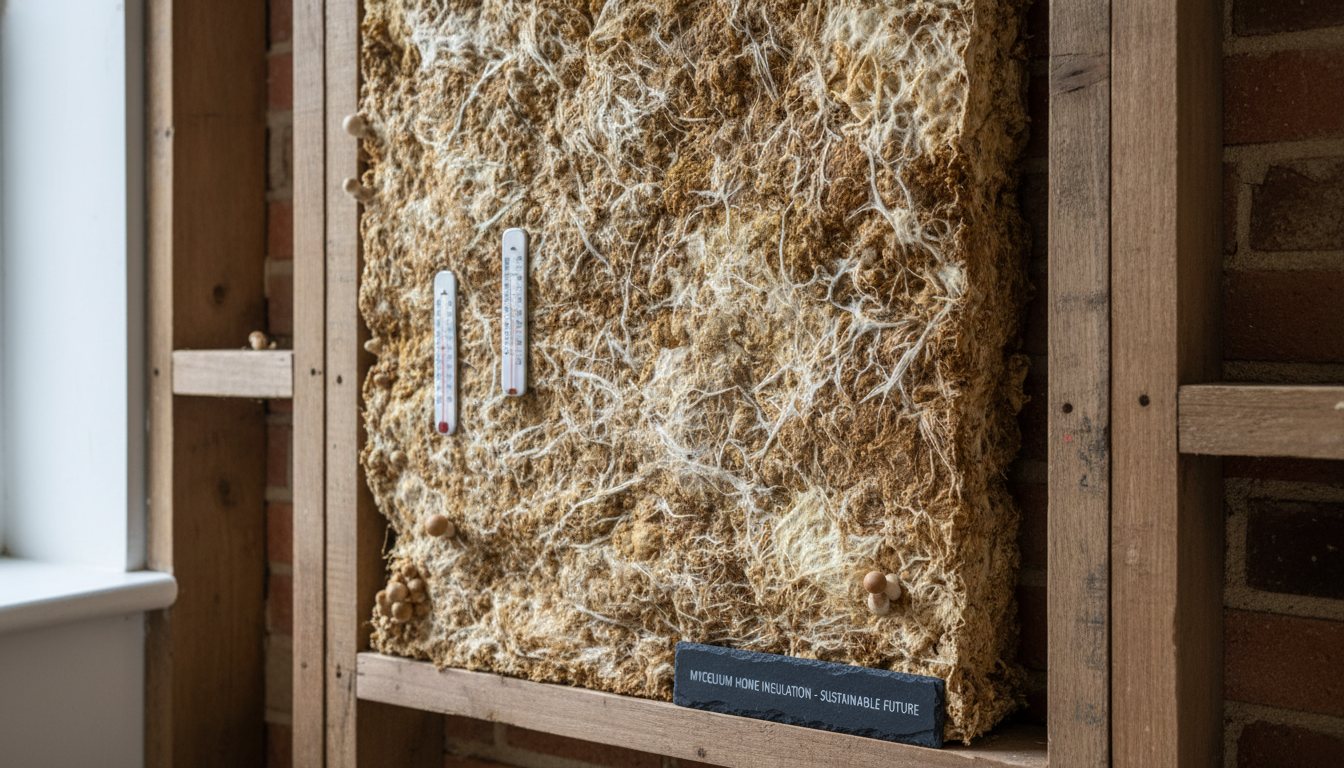
The “Bio-Home” revolution has officially reached a tipping point in early 2026 with the launch of the first mass-market Mycelium DIY Kits. For decades, home renovation relied on resource-heavy industries and synthetic polymers that left a lasting environmental scar. Today, the narrative is shifting toward biology. DIY enthusiasts are no longer just consumers; they are cultivators, purchasing “spore-and-substrate” bags to grow custom-molded insulation, wall tiles, and even structural furniture. This transition from industrial manufacturing to domestic growth represents one of the most significant shifts in home improvement history.
Unlike traditional fiberglass or foam, which are often difficult to recycle and energy-intensive to produce, these mushroom-based materials are inherently carbon-negative. The process of growing mycelium actually sequesters carbon, locking it into the physical structure of the home. As global carbon-tax incentives for residential properties become more stringent, the financial and environmental benefits of Mycelium DIY Kits have made them a favorite for home office renovations and basement conversions alike. This is no longer a fringe science experiment; it is the new gold standard for modern eco-renovators.
The Science of Bio-Fabrication: How Mycelium DIY Kits Work
At the heart of this movement is the incredible power of fungal networks. Mycelium is the root structure of mushrooms, a dense web of thread-like filaments called hyphae. When provided with a substrate—typically agricultural waste like hemp hurds, corn husks, or sawdust—the mycelium acts as a natural biological glue, binding the material into a solid, lightweight mass. Mycelium DIY Kits provide the exact ratio of spores and nutrients needed to kickstart this process in a controlled environment.
The cultivation process is surprisingly simple for the average homeowner. It involves placing the inoculated mixture into 3D-printed or wooden molds, allowing it to grow in a dark, humid environment for approximately 7 to 10 days. Once the mycelium has filled the mold and achieved the desired density, the material is “baked” in a low-heat oven. This crucial step stops the biological growth and solidifies the structure, resulting in a material that is as strong as heavy-duty plastic but entirely compostable at the end of its life cycle.
Superior Performance: Beyond Sustainability
While the environmental credentials of Mycelium DIY Kits are impressive, their performance metrics are what truly drive mainstream adoption. Mycelium-based materials are naturally fire-resistant without the need for toxic chemical retardants. In laboratory tests, these bio-materials char rather than melt, providing a significant safety advantage over petroleum-based foams. This makes them an ideal choice for internal wall insulation and acoustic panels.
- 01
- 02
- 03
- 04
Acoustic Dampening and Thermal Efficiency
Acoustic performance is another area where mushroom-grown materials excel. The complex, porous structure of mycelium is exceptionally efficient at absorbing sound waves, making it a top-tier choice for home recording studios and quiet workspaces. Furthermore, its thermal insulation properties rival those of high-end synthetic products, helping homeowners maintain stable indoor temperatures while reducing energy consumption. By using Mycelium DIY Kits, renovators are achieving a level of comfort that traditional materials struggle to match.
Cultivating a Circular Economy at Home
The rise of Mycelium DIY Kits represents a fundamental shift from a linear “take-make-waste” economy to a circular one. When a homeowner decides to redecorate or renovate again, mycelium-based fixtures do not need to head to a landfill. Instead, they can be broken down and added to a garden compost pile, where they return nutrients to the soil. This eliminates the “waste phase” of the product lifecycle entirely, aligning perfectly with the global push for plastic-free homes.
Social media platforms are currently flooded with #MushroomMakeover time-lapses, showcasing entire rooms transformed with home-grown materials. This visibility has turned bio-hacking into a mainstream status symbol. Being able to say your wall tiles were grown in your garage is the ultimate flex for the 2026 environmentally conscious renovator. It signals a deep commitment to planetary health and a sophisticated understanding of future-proof technology.
Economic Resilience and the Future of DIY
Industry analysts note that the popularity of Mycelium DIY Kits is also a strategic response to global supply chain volatility. Traditional timber and synthetic insulation prices have fluctuated wildly due to geopolitical tensions and resource scarcity. By decentralizing the production of building materials, DIYers are insulating themselves—literally and figuratively—from market instability. The ability to produce high-quality construction materials on-site reduces transportation costs and dependence on industrial manufacturing giants.
As we look toward the future of residential design, the integration of biology and architecture is inevitable. The “Bio-Home” is no longer a concept of the distant future; it is being built today, one spore at a time. With Mycelium DIY Kits, the power to create a sustainable, safe, and beautiful living environment is quite literally in the hands of the people. The gold standard has been set, and it is green, growing, and remarkably resilient.
- 01
- 02
- 03
- 04
- 05
- 06
- 07
- 08
0 Comments