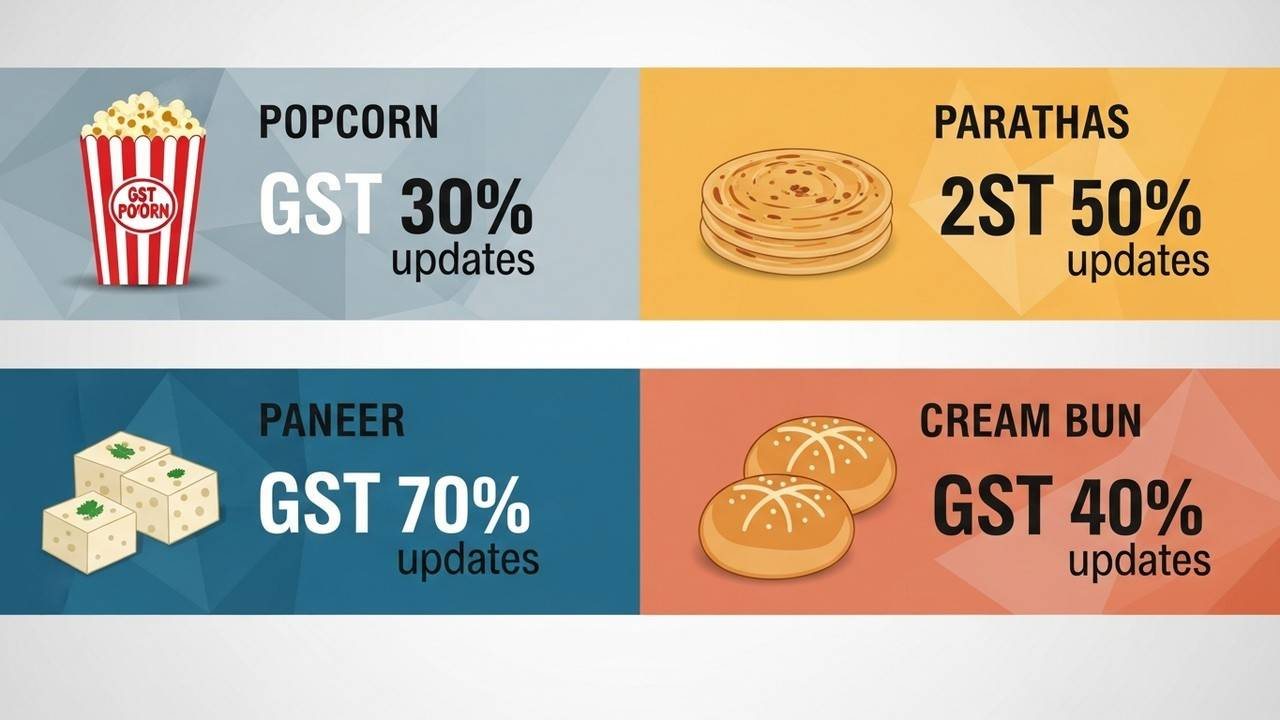
The Goods and Services Tax (GST) regime, while aiming for a unified tax structure, has often been a source of confusion and debate, particularly concerning everyday food items. Recent discussions have centered on specific products like popcorn, parathas, and cream buns, where differing interpretations of tax slabs have led to uncertainty for both consumers and businesses. This article aims to clarify the prevailing GST rates and the rationale behind them, offering a comprehensive overview to demystify these common household staples, ensuring that the complexities of GST on popcorn, parathas, and paneer are brought into clear focus for everyone.
Decoding the Nuances of GST on Common Food Items
The Goods and Services Tax (GST) regime, while aiming for a unified tax structure, has often been a source of confusion and debate, particularly concerning everyday food items. Recent discussions have centered on specific products like popcorn, parathas, and cream buns, where differing interpretations of tax slabs have led to uncertainty for both consumers and businesses. This article aims to clarify the prevailing GST rates and the rationale behind them, offering a comprehensive overview to demystify these common household staples.
The Popcorn Conundrum: From Cinema Halls to Home Consumption
The tax treatment of popcorn has been a particularly sticky point, with different rates applied depending on the context of its sale. Initially, popcorn sold in cinema halls, often considered part of the entertainment service, attracted a higher GST rate. However, the distinction between popcorn as a food item versus an ancillary service has been a subject of much deliberation.
Clarifying Popcorn’s GST Slab
A significant clarification has emerged regarding popcorn. Previously, there was ambiguity about whether popcorn, especially when sold in multiplexes or as a ready-to-eat snack, should be taxed at the same rate as other food items or fall under a higher service tax bracket. The latest directives aim to standardize this, ensuring that popcorn, irrespective of where it’s purchased, is subjected to a consistent GST levy.
The prevailing understanding now leans towards taxing popcorn as a food item. This means that the GST rate applied will align with that of other processed food products. This move is intended to simplify compliance for vendors and provide price predictability for consumers, removing the previous inconsistency that often led to customer complaints and operational challenges for businesses dealing in this popular snack.
Unpacking the GST on Parathas and Flatbreads
Parathas, a staple in many Indian households, have also seen their share of GST-related discussions. The complexity arises from the variety of parathas available – from plain ones to those stuffed with various ingredients, and whether they are served as a full meal or a snack.
Standardizing Paratha Taxation
The GST Council has worked to bring clarity to the taxation of parathas. The crucial factor often lies in whether the paratha is considered a ready-to-eat item or a pre-packaged good. Ready-to-eat parathas, especially those served in restaurants or eateries, have historically been subject to different tax treatments compared to frozen or pre-packaged versions intended for later consumption.
Recent clarifications have aimed to establish a more uniform approach. The intent is to ensure that the tax applied reflects the nature of the product and its consumption. This standardization helps in creating a level playing field for different types of food service establishments and manufacturers, while also making it easier for consumers to understand the tax implications on their purchases.
Resolving Confusion Around Paneer and Dairy Products
Paneer, a fresh dairy product integral to Indian cuisine, has also been a point of discussion regarding its GST classification. As a perishable item and a core component of numerous dishes, its tax status has been scrutinized to ensure fairness and prevent undue burden.
GST on Fresh Paneer
The GST on fresh paneer, particularly when sold loose or unpackaged, has generally been at a lower rate, reflecting its status as a basic foodstuff. However, ambiguities could arise when paneer is used as an ingredient in processed foods or ready-to-eat meals, potentially attracting different tax rates based on the final product’s classification.
The ongoing efforts within the GST framework are geared towards ensuring that essential food items like paneer are taxed in a manner that is both reasonable and easy to administer. This involves distinguishing between paneer sold in its basic form and paneer incorporated into more complex food preparations, thereby streamlining the tax process.
Cream Buns and Baked Goods: A Tax Reduction
In a move that has been welcomed by consumers and the baking industry, certain baked goods, including cream buns, have seen a reduction in their GST rates. This decision is part of a broader strategy to rationalize taxes on essential and commonly consumed items.
Lowering the Tax Burden on Cream Buns
The reduction in GST on items like cream buns signifies a shift towards aligning tax rates with the everyday consumption patterns of the populace. Previously, these items might have been categorized under a higher tax bracket, making them more expensive for the average consumer.
The revised tax structure aims to make these products more accessible, potentially boosting sales for bakeries and providing consumers with more affordable options. This adjustment reflects a responsive approach by the tax authorities to market demands and consumer affordability, ensuring that the GST regime remains dynamic and attuned to economic realities.
- 01
- 02
- 03
- 04
The Broader Impact of GST Harmonization
The continuous efforts to harmonize GST rates across various food items are crucial for the smooth functioning of the economy. When tax structures are clear and consistent, it benefits businesses through simplified compliance and planning, and consumers through transparent pricing and predictable costs.
Streamlining Compliance and Consumer Trust
The recent clarifications on popcorn, parathas, paneer, and cream buns are indicative of a larger trend towards refining the GST system. By addressing specific points of confusion, the authorities aim to build greater trust and reduce the potential for disputes or misinterpretations.
This ongoing process of refinement is vital for ensuring that the GST continues to serve its purpose of creating a unified and efficient indirect tax system, fostering economic growth and making the tax experience less burdensome for all stakeholders involved. The focus remains on creating a balanced approach that supports both revenue generation and economic activity.
Final Word on Evolving GST Slabs
The dynamic nature of the GST regime means that clarifications and adjustments are an ongoing process. The recent pronouncements on items like popcorn, parathas, and cream buns underscore the government’s commitment to addressing ambiguities and simplifying the tax landscape. While these specific changes offer much-needed clarity, the broader implication is the continuous evolution of GST to better serve the Indian economy. Businesses and consumers alike should stay informed about these updates to navigate the tax system effectively and ensure compliance, ultimately contributing to a more streamlined and predictable economic environment.
|
Food Item |
Previous Ambiguity |
Current GST Clarification |
Impact |
|
Popcorn |
Varied rates (e.g., higher in cinemas) |
Standardized as a food item, likely at a lower rate. |
Price consistency for consumers, simplified compliance for businesses. |
|
Parathas |
Dependence on ingredients and service context. |
Clarified treatment based on whether it’s ready-to-eat or pre-packaged. |
Level playing field for food establishments, clearer pricing. |
|
Paneer (Fresh) |
Potential confusion when used in processed foods. |
Generally taxed at a lower rate as a basic foodstuff; distinction maintained for processed items. |
Ensures affordability of a staple dairy product. |
|
Cream Buns & Baked Goods |
Potentially higher tax brackets. |
GST rate reduction announced. |
Increased affordability for consumers, potential boost for the bakery industry. |
|
Overall GST Harmonization |
Inconsistent application leading to confusion. |
Ongoing refinement to standardize rates and reduce ambiguity. |
Builds consumer trust, simplifies business operations, supports economic efficiency. |
From our network :
- A Guide to Different Types of USB Connectors and Their Features
- SQL Server CPU Spikes Every 5 Seconds: Troubleshooting Replication Issues
- Meta Wins Lawsuit Against Former Employee’s Memoir: Careless People
- Fundamentals of Physics by Resnick Halliday Walker Book Review
- Mysterious Drone Sightings in New Jersey Prompt Federal Investigations
- SpaceX Dragon’s Propulsive Landing: A Backup for Safe Return
0 Comments