


Harvest Festival Holocaust: Unraveling the Majdanek Massacre and Erntefest
- Aug 25, 2025
- 12 min read
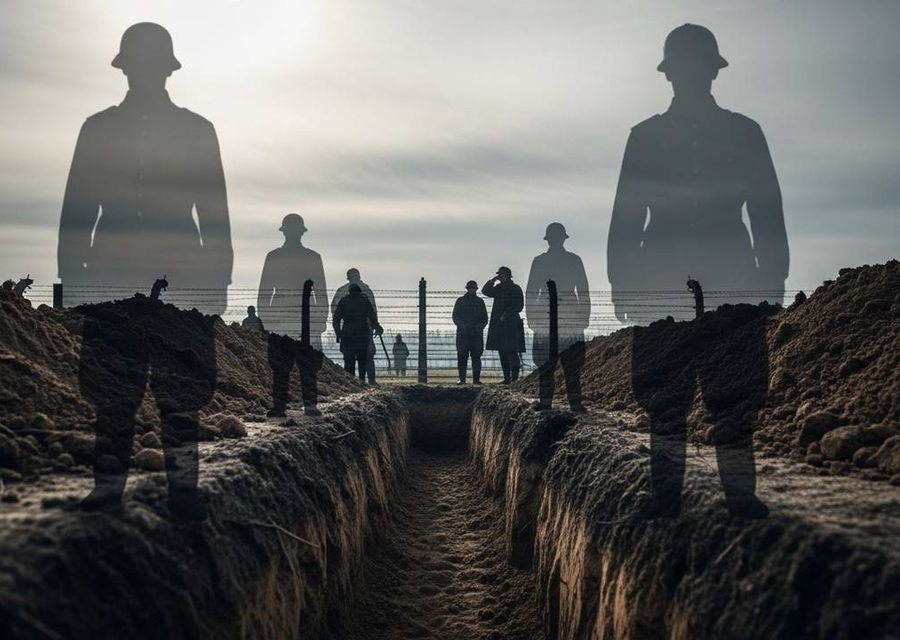
Harvest Festival Holocaust reveals how bureaucratic precision and ruthless necessity converged in the darkest days of the Holocaust. This analysis uncovers the sequential logic behind Erntefest, the 1943 operation that culminated in the mass murder of tens of thousands of Jewish people in the Lublin District. By tracing orders from Heinrich Himmler to the field commanders, examining the logistical choreography, and weighing the aftermath, we illuminate how a state-sponsored machinery of destruction could function with the veneer of military efficiency. The following sections disentangle the planning, execution, and haunting aftereffects, offering a sober record of one of the era’s most brutal episodes.
Harvest Festival Holocaust: Origins and the Plan
In this opening examination, the origins and planning of the Harvest Festival Holocaust emerge as a tightly coordinated sequence. The operation grew from a perceived need to terminate remaining Jewish labor in the Lublin District, a decision that combined strategic calculation with symbolic timing. The key figures—Heinrich Himmler, Friedrich Krüger, and Jakob Sporrenberg—translated political resolve into a military-style timetable. Zigzag trenches were prepared not as a defensive feature but as execution sites, a grim illustration of how deception and brutality could be woven into the fabric of daily life in occupied Poland.
Harvest Festival Holocaust depended on a multilateral command chain, with SS leadership, police battalions, and local officials aligning their efforts. The operation’s nom de guerre, Erntefest, concealed a stark objective: to eradicate a defined population segment with overwhelming force. The coordination among units stationed across Majdanek, Trawniki, and Poniatowa demonstrates how the Nazi apparatus marshaled manpower, vehicles, and communications to deliver a single, devastating blow. The result was not an isolated atrocity but a calculated, systemic act designed to demonstrate control and suppress resistance in one decisive sweep.
Harvest Festival Holocaust: Strategic Intent and Command Structure
The strategic intent of Harvest Festival Holocaust was to extinguish Jewish labor capacity in a single, definitive operation. This goal translated into a command structure that collapsed silos between the SS, Ordnungspolizei, and auxiliary forces, creating a unified front under Sporrenberg’s leadership. The plan relied on shock and speed—rapid encirclement, simultaneous actions at multiple camps, and the orchestration of force to minimize internal hesitation. Understanding this architecture helps explain why the killings could be carried out with such ruthless efficiency, reflecting a chilling fusion of strategy and ideology.
Crucially, the plan depended on minimizing public perception of resistance. Commanders used loudspeakers to mask gunfire, rerouted civilian movement, and deployed distraction tactics to maintain a veneer of routine normalcy. This section also highlights how the operation exploited the geography of the Lublin District, leveraging proximity to major camps and transport routes to synchronize massacres. The orchestration reveals not merely brutal acts but a calculated demonstration of administrative precision applied to mass murder.
Harvest Festival Holocaust: Logistical Fortifications and Zigzag Trenches
The logistical dimensions of Harvest Festival Holocaust reveal a chilling fusion of planning and deception. Prisoners were compelled to dig trenches that zigzagged around the perimeters of Majdanek, Poniatowa, and Trawniki. The trenches served as execution sites, their shape meant to appear defensible while concealing the true intent of mass murder. The sheer scale—hundreds of prisoners drilling in shifts—speaks to the administrative stamina mobilized for the operation. This logistical feat was not an isolated act, but a demonstration of how infrastructure could be repurposed for systematic killing.
Field 5 near Majdanek became a focal point for the execution squads, who waited in rotation to replace one another. The depth, length, and capacity of the trenches were calibrated to maximize casualties while facilitating the removal and concealment of bodies. The trenches’ engineered geometry allowed later stages of cleanup and burial, underscoring how technical precision underpinned a brutal, human tragedy. The deliberate planning of these features highlights the disturbing synergy between physical space and lethal intent.
Harvest Festival Holocaust: The Majdanek Massacre
Majdanek stands as a primary theatre of the Harvest Festival Holocaust, where a mass execution unfolded with alarming regularity. The daybreak shelling of routine life gave way to a systematic separation of Jewish prisoners, who were funneled toward execution zones while non-Jewish inmates were kept apart. The operation’s scale—tens of thousands murdered within hours—illustrates how quickly a camp environment could be transformed into a site of annihilation. This section examines the sequence of marches, rounds, and the grim choreography that defined Majdanek’s dark hours.
Witnesses testified to the ritualized nature of the killings, the way prisoners were stripped, counted, and directed into the trenches. The soundscape—music to drown the gunfire—accompanied a process designed to erase individual identity in favor of collective death. Even as gunfire roared, observers watched from surrounding rooftops, and Sporrenberg tracked the operation from the air, underscoring the scale and the surveillance embedded in the massacre. The Majdanek chapter reveals how mass murder can unfold with mechanical precision under the cover of fear and routine.
Harvest Festival Holocaust: The Execution Trenches and Process
At Majdanek, the trenches extended long enough to receive large groups at a time, with orderlies guiding prisoners to undress and lie down before the shooters. The process was standardized: groups of ten moved forward, then were dispatched with a single, decisive shot to the nape of the neck. Execution squads rotated on a strict schedule, ensuring that the pace did not falter over the course of the morning. This routine was designed to minimize the chance of spontaneous resistance and maximize the efficiency of the killings.
The logistics included transport from other camps and the arrival of additional troops who reinforced the front lines as the numbers climbed. The orchestration of music, crowd control, and tactical positioning created a concrete, procedural horror that could be replicated across sites in rapid succession. The Majdanek massacre thus serves as a stark reminder of how organizational capabilities can be misused for mass violence and the erasure of human dignity.
Harvest Festival Holocaust: Witnesses and Soundtrack of Death
Observations from the periphery—Polish locals on rooftops, the presence of a Luftwaffe aircraft overhead, and the silent testimony of survivors—offer a chilling diary of the event. The use of loudspeakers amplified the carnage while camouflaging it within a synthetic routine, a strategy that kept bystanders at bay and maintained the illusion of normalcy. The testimonies underscore how ordinary settings—apartments, streets, and even airfields—could be transformed into theaters of murder, with witnesses both complicit and overwhelmed by the scale of the crime.
The Majdanek narrative also highlights the psychological costs borne by those who carried out or witnessed the killings. Some soldiers reportedly struggled with the violence, even as others performed their duties with cold efficiency. The testimonies collected in postwar trials and memorials form a complex mosaic of memory, guilt, and accountability that continues to shape Holocaust historiography. Majdanek’s massacre remains a focal point for reflection on the machinery of annihilation.
Harvest Festival Holocaust: Poniatowa and Trawniki
Beyond Majdanek, the Harvest Festival Holocaust unfolded at Poniatowa and Trawniki, extending the scale of brutality across multiple sites. The Poniatowa operation involved cadres from various police units and the Reserve Police Battalion 101, delivering a second wave of mass killings that intensified a grim calendar of violence in early November 1943. The dispersal of victims across camps from the Warsaw district to the Lublin hinterlands reveals the geographic breadth of the operation and the logistical reach of the SS–police apparatus.
The coordination across camps required stringent security measures, including sealed borders, cut telephone lines, and duplicated command structures designed to prevent leaks. As at Majdanek, victims at Poniatowa and Trawniki were stripped and driven to prepared trenches, with the grim choreography repeated under different local conditions. The orchestration demonstrates how the Nazi regime weaponized space, transport networks, and police power to extend a single, devastating act of mass murder across several sites in a single operational window.
Harvest Festival Holocaust: Poniatowa's Seal and Secrecy
Poniatowa’s massacre was marked by a careful seal of secrecy that aimed to prevent information from leaking beyond the local command. The camp’s telephone lines were cut, and the alignment of security cordons created a protective bubble around the operation. The discipline of the units—Reserve Police Battalion 101 and others—reflected a commitment to maintaining control over an immense human tragedy, even as the camp’s inhabitants braced for what appeared to be a routine day that would end in catastrophe.
The secrecy extended to the handling of the aftermath, with the focus shifting to the swift disposal of bodies and the minimization of eyewitness accounts. Reports of resistance by a handful of inmates, as well as attempts by some to hide or escape, illustrate the fragile human responses under extreme duress. Poniatowa’s experience is a stark reminder of how compartmentalization and fear can shape the behavior of both perpetrators and bystanders in times of mass violence.
Harvest Festival Holocaust: Trawniki and Intersecting Fates
Trawniki, like Majdanek and Poniatowa, became a stage for a brutal execution sequence that underscored the epidemic reach of the Harvest Festival Holocaust. The transfer of inmates, the rounding up of groups, and the deployment of multiple firing teams demonstrated the forensic thoroughness with which the operation was executed. In Trawniki, as elsewhere, the plan’s success depended on the seamless movement of people, vehicles, and communications across a hostile landscape.
The intersection of Trawniki with other sites reveals how the operation unfolded as a synchronized campaign rather than isolated incidents. The continued influx of victims from surrounding camps expanded the scale of the massacre, reinforcing the perception that the Nazis sought to demonstrate total control over occupied territory. The Trawniki component thus contributes to understanding how Erntefest functioned as a coordinated, multi-site mechanism of annihilation.
Harvest Festival Holocaust: The Lipowa 7 and Labor Camp Scenes
Within the network of camps that fed the Harvest Festival Holocaust, Lipowa 7 and other labor camps played pivotal but often overlooked roles. Lipowa 7 housed Jewish prisoners of war who would later become part of the cleanup and post-massacre labor processes. The arrangement of roles at Lipowa and its proximity to Majdanek illustrates how the operation exploited dispersed facilities to maintain momentum and control over a sprawling system of camps. The interplay between military and civilian authorities in these moments underscores the complexity of implementing such an atrocity.
As the dead were counted and the living faced a bleak aftermath, the Lipowa 7 site also reveals the human dimension of the operation’s reach. Some prisoners were kept alive briefly to perform cleanup tasks, while others were moved to different facilities for sorting clothing, valuables, and other effects. The logistics of post-massacre labor and the scouring of belongings reflect a calculated effort to extract value from the victims even as the regime worked to erase traces of its crime.
Harvest Festival Holocaust: Lipowa 7 Camp and War Theater
Lipowa 7 served as a staging ground for organizing the dispersal of prisoners and the redirection of survivors toward further degradation. The camp’s leadership, in coordination with Majdanek command, orchestrated the transfer of prisoners who would later be consumed by the broader cleanup operation. The war theater extended beyond the trenches, as the survivors faced the dual tasks of concealment and complicity, navigating the moral ambiguities that arise in the face of genocidal deadlines and orders.
The Lipowa 7 narrative also emphasizes the role of external observers and local civilians who bore witness to events unconsciously or unwillingly. The presence of bystanders, the silence of the surrounding community, and the eventual postwar memory all contribute to a layered memory of the massacres. Lipowa 7 thus encapsulates how sites of mass murder often become nodes in a larger system of exploitation, coercion, and bureaucratic violence.
Harvest Festival Holocaust: The Aftermath at the Airfield and Clean-up
After the main killings, the cleanup phase began in earnest. Victims’ clothing and valuables were cataloged, with women often sent to Auschwitz and men put to work in cremation or Sonderkommando units. The cleanup phase required a substantial workforce and extended over weeks to months, leaving a lingering stench and a tangible sense of ruined humanity in the surrounding areas. The orchestration of this phase reveals the depth of planning that underpinned even the most grotesque aspects of the operation.
The aftermath also involved attempts to remove evidence and maintain operational security. The men who conducted cremations and the officers who supervised the cleanup faced legal reckoning after the war, but the memory of their actions continues to challenge historians and communities alike. The airfield cleanup thus stands as a stark reminder that the genocide did not end with a shot; it extended into the processing and erasure of the victims’ existence.
Harvest Festival Holocaust: The Role of Auxiliary Forces and Ukrainian Participants
Among the dark chapters of Harvest Festival Holocaust, the involvement of Ukrainian collaborators and local auxiliary units raises difficult questions about complicity, coercion, and the logistics of mass murder. The operation mobilized a spectrum of participants, from SS personnel to Police Regiments and local security forces, whose participation varied in degree but shared a common commitment to the elimination of Jewish lives. The complex interplay of loyalty, coercion, and fear shapes the moral landscape of this historical episode and invites careful reflection on how occupied communities became entangled in atrocity.
The involvement of Ukrainian participants, often under harsh coercion or incentive, underscores the broader wartime context in which local actors faced brutal choices. The interaction between occupying forces and regional collaborators illustrates how the machinery of genocide depended on a network of willing and coerced participants operating within a shared framework of violence. The ethical questions raised by these collaborations remain central to how we remember and study this history today.
Harvest Festival Holocaust: Emerging Collaborations and Resistance
Within the mass operations, pockets of resistance and hesitation surfaced among some camp personnel and local populations. These moments, though rarely decisive, reveal the fragility of coerced conformity under extreme conditions. Instances of resistance—whether in attempted escapes, protests, or reluctant proximity to the killing zones—provide valuable testimony to the human capacity for dissent, even when faced with overwhelming pressure. The study of these episodes helps illuminate the spectrum of human response to genocidal acts.
The dynamics of collaboration and resistance also highlight the moral ambiguities that pervaded wartime occupation. Some individuals found themselves choosing between survival, complicity, and silent dissent, while others faced punishment or worse for those choices. The complexity of these interactions reminds us that historical assessment must grapple with both structural forces and personal decisions within a brutal system of domination.
Harvest Festival Holocaust: Ukrainian Regiments Under Strain
Observers note that some Ukrainian formations faced internal strains under the stress of participation in the operation. Alcohol, fatigue, and fear weighed on the units deployed to cooperating camps, with reports of desertion and wavering discipline in the most intense moments. These human factors remind us that the machinery of genocide operates under the pressures of time, hierarchy, and individual psychology, not as a single act performed in isolation but as a constellation of decisions under duress.
The strain on collaborators also had long-term consequences for memory and accountability. Postwar analyses sought to determine the extent to which coercion, coercive incentives, and local grievances contributed to the scale of participation. The Ukrainian participants’ role remains a contested aspect of the historical record, prompting ongoing scholarship and reflection on responsibility within wartime alliances.
Harvest Festival Holocaust: The Aftermath in the Lublin District
The immediate aftermath of Harvest Festival Holocaust left a fractured landscape across the Lublin District, with thousands of survivors in labor camps and a territory scarred by mass murder. The perilous days that followed the massacres included the sorting of clothing and valuables, the removal of corpses, and the ongoing manipulation of space to erase the visible traces of atrocity. The region’s communities were forced to confront the consequences of the operation while contending with ongoing wartime pressures and shifting frontlines.
In the broader context of World War II, the Harvest Festival Holocaust marked the end of Operation Reinhard, a brutal phase that decimated Jewish populations in the General Governorate. The scale of death and the upheaval in the Lublin District had lasting effects on postwar remembrance, historical scholarship, and the commemorative landscape of Poland. The local memory of Majdanek, Poniatowa, and Trawniki continues to shape international understandings of genocide and the imperative to honor victims through memorials, education, and collective action against hatred.
Harvest Festival Holocaust: Cleanup, Memory, and Trials
In the wake of the massacres, cleanup efforts required disciplined labor under supervision by SS administrators and local functionaries. The postmassacre processes, including cremation, sorting, and confiscation of belongings, served the regime’s broader objectives of exploitation even after the killing had occurred. The aftermath also spurred trials and accountability efforts in the postwar period, with Sporrenberg and other involved individuals facing justice, while others evaded punishment or faced limited penalties due to the complexities of wartime evidence and testimony.
Memory initiatives at Majdanek and related sites offer a crucial counterweight to the erasure of history. Ceremonies, museum exhibitions, and survivor testimonies provide a living archive of the victims and a reminder of the dangers posed by totalitarian ideologies. The legacy of Harvest Festival Holocaust endures in scholarly work, commemorative practices, and ongoing efforts to educate future generations about the consequences of hatred, coercion, and state-sponsored violence.
The Final Takeaway: Harvest Festival Holocaust
Harvest Festival Holocaust stands as a stark reminder of how carefully engineered systems of violence can be deployed on a grand scale within occupied Europe. The operation’s architecture—central planning, multi-site execution, and a calculated cleanup—exposes the chilling mechanics by which genocide can be organized as if it were a routine military campaign. Gratitude for the courage of survivors and the diligence of historians remains essential as we translate these difficult lessons into memory, policy, and education, ensuring that the voices of the victims remain central to our understanding of the past.
Harvest Festival Holocaust: Lessons for Policy and Memory
From the meticulous planning to the brutal implementation, the Harvest Festival Holocaust teaches enduring lessons for policymakers, scholars, and citizens. The importance of robust democratic safeguards, vigilant institutions, and a commitment to human rights stands out in stark relief when confronted with such atrocities. By integrating survivor testimony, archival research, and cross-cultural remembrance, societies can build resilient defenses against hatred and totalitarian impulses, transforming memory into a bulwark against repetition.
Ultimately, the memory of Harvest Festival Holocaust challenges us to translate knowledge into action. Education, remembrance, and advocacy become instruments of accountability, ensuring that the victims’ stories guide contemporary debates about justice, human dignity, and the prevention of future genocides. The final takeaway is not a celebration of survival but a solemn vow to honor those lost by dedicating ourselves to a more humane world.
Section | Focus |
Harvest Festival Holocaust: Origins and the Plan | Origins, command structure, strategic intent |
Majdanek Massacre | Mass execution sequence and witness accounts |
Poniatowa and Trawniki | Second sites, unit coordination, secrecy |
The Lipowa 7 and Labor Camp Scenes | Camp dynamics, post-massacre labor |
Role of Auxiliary Forces and Ukrainian Participants | Collaborators, coercion, memory |
The Aftermath in the Lublin District | Cleanup, memory, and trials |
Memory and Memorialization | Memorials, testimony, education |
The Final Takeaway: Harvest Festival Holocaust | Lessons for policy and memory |
Final Reflections and Accountability | Postwar consequences, justice, memory |
Commemoration and Learning | Education, prevention, remembrance |


Comments