


Israel Gaza conflict: Insights and Implications for Civilians and Diplomacy
- Aug 20, 2025
- 15 min read
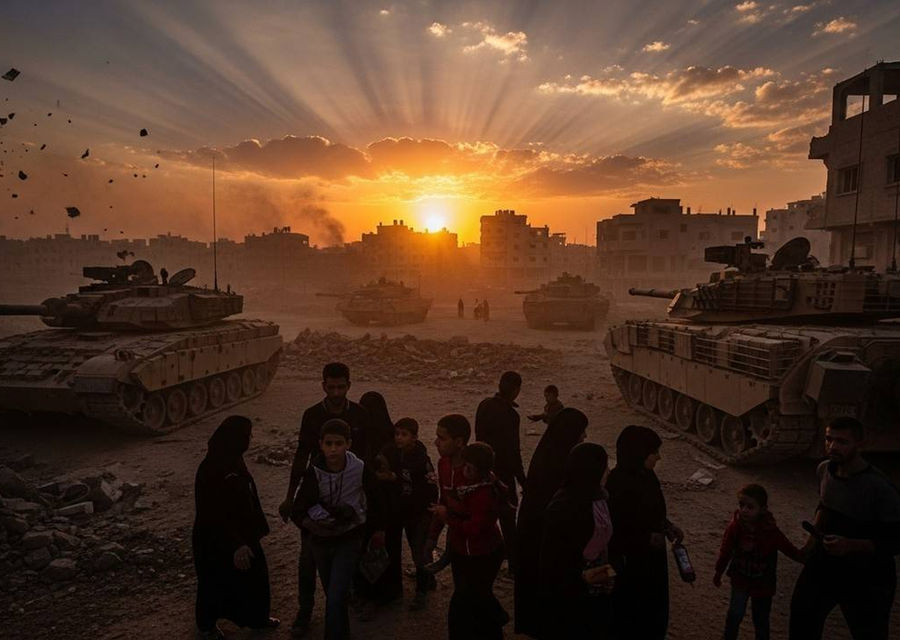
Israel Gaza conflict has reached a perilous inflection point as military actions intensify around Gaza City, and civilians confront the immediate consequences of sieges, evacuations, and planned seizures. The current phase is not only a test of military strategy but a crucible for humanitarian response, international diplomacy, and the resilience of people living under bombardment and uncertainty. As reports indicate mounting casualties and a looming displacement of close to a million residents, the global community balances urgent protection of civilians with long-standing regional dynamics. This piece expands on the tactical shifts, historical roots, and broader implications shaping the Israel Gaza conflict, offering context, analysis, and grounded reflections for readers seeking understanding beyond the headlines.
Israel Gaza conflict has reached a perilous inflection point as military actions intensify around Gaza City, and civilians confront the immediate consequences of sieges, evacuations, and planned seizures. The current phase is not only a test of military strategy but a crucible for humanitarian response, international diplomacy, and the resilience of people living under bombardment and uncertainty. As reports indicate mounting casualties and a looming displacement of close to a million residents, the global community balances urgent protection of civilians with long-standing regional dynamics. This piece expands on the tactical shifts, historical roots, and broader implications shaping the Israel Gaza conflict, offering context, analysis, and grounded reflections for readers seeking understanding beyond the headlines.
Israel Gaza conflict: Gaza City Assault and Strategic Stakes
Two lines of thought define the current moment in the Israel Gaza conflict: the immediacy of urban combat and the long arc of political objectives surrounding a potential seizure of a major urban center. Gaza City, long a focal point of battles and humanitarian crises, stands at the intersection of military planning, civilian vulnerability, and international attention. As forces prepare for intensified operations, questions intensify about civilian corridors, evacuation orders, and the signals sent to regional actors. The stakes extend beyond the streets to the diplomatic currents that shape whether a city can be held, liberated, or redrawn within a broader conflict paradigm.
Urban warfare and civilian risk in the Israel Gaza conflict
Urban warfare in dense, civilian-rich environments transforms every street into a strategic fault line, where the choreography of movement, firepower, and shelter choices determine life or death for thousands. In such settings, the probability of harm compounds with every dawn and dusk, as schools, clinics, and homes become possible targets or shielded refuges. Civilians face decisions about evacuation, shelter, or staying to care for vulnerable relatives, each choice carrying profound consequences. The international community watches for adherence to humanitarian law, while air and ground operations intersect with the day-to-day realities of families seeking safety under shellfire.
Beyond the immediate danger, the psychological toll on communities cannot be overstated. Displacement fragments social networks, disrupts access to essential services, and amplifies fear as rumors and misinformation travel faster than relief supplies. Relief organizations strive to establish safe corridors, but competition for limited routes and the risk of surges in violence complicate planning. In this fragile ecology, resilience emerges not only from military adaptation but from coordinated civilian protection, humanitarian access, and credible communication that reduces panic while conveying accurate risk assessments.
The strategic calculus also involves distinguishing between legitimate military objectives and civilian harm, a distinction that anchors international law and affects the legitimacy of action in the eyes of observers worldwide. When urban terrain becomes a battlefield, protecting civilians requires careful targeting, timely warnings, and the deliberate minimization of delay to medical and humanitarian didactic needs. Observers stress the importance of transparent verification mechanisms, independent monitoring, and continuous civilian-first tactics as a standard expectation in any protracted operation within populated centers.
For residents, every hour carries new imperatives: securing water, food, and medical supplies; identifying safe rooms or shelters; and coordinating with aid groups to confirm safe passage. As the conflict intensifies, families weigh severe choices—whether to stay in place to protect loved ones who cannot move or to risk the uncertainty of a crowded shelter with limited resources. The convergence of strategic aims and civilian vulnerability in Gaza City highlights the ethical, legal, and humanitarian dimensions of modern urban warfare in a tightly contested theater.
Displacement and civilian corridors under the Israel Gaza conflict
Displacement becomes both a symptom and a driver of the Israel Gaza conflict, reshaping demographics, service delivery, and post-conflict recovery. When thousands of residents evacuate toward stated safe zones or temporary shelters, aid responders confront new demand patterns, including the need for emergency food, water, sanitation, and protection from exploitation. Shelters become temporary ecosystems, where shared spaces, scarce privacy, and the pressure to maintain dignity intersect with the risk of overcrowding, disease, and exhaustion. The management of displacement thus requires robust coordination among municipal authorities, humanitarian agencies, and international partners to prevent collapses in basic life-support systems.
Access corridors for humanitarian relief are critical lifelines in any urban siege, yet they are vulnerable to fluctuating security conditions. Negotiations, ceasefires, or truces might open windows for aid convoys, medical evacuations, and the distribution of essential supplies. However, the reliability of such corridors hinges on consistent security guarantees, trustworthy monitoring, and accountability for any disruptions. Civilian displacement also transforms urban planning challenges in the medium and long term, compelling authorities to rethink shelter locations, healthcare delivery points, and the prioritization of vulnerable groups such as children, the elderly, and the disabled.
Humanitarian actors emphasize the ethical duty to protect civilians while enabling safe passage for aid workers. This requires precise coordination with local communities to identify temporary destinations that minimize travel times, reduce exposure to danger, and ensure access to critical services on arrival. In practice, discussions around displacement must balance the urgency of immediate relief with the longer horizon of rebuilding and reconciliation, recognizing that the aftermath of a major urban operation often outlives the battles of the day by years and perhaps generations.
Regional and international observers stress that displacement should be treated as a protected civilian right, not as a byproduct of military strategy. The emphasis is on minimizing harm, documenting casualties, and ensuring accountability for violations. In the coming weeks, the effectiveness of civilian corridors and the reliability of safety assurances will be pivotal in shaping both short-term humanitarian relief and longer-term stability in the area.
International responses and legal considerations in the Israel Gaza conflict
The Israel Gaza conflict has elicited a spectrum of international responses, from calls for restraint to demands for accountability. Governments, regional organizations, and humanitarian networks weigh the implications of military moves against the principles of proportionality, distinction, and necessity enshrined in international humanitarian law. Debates center on whether operations in Gaza City can be conducted in ways that minimize civilian suffering while achieving legitimate security objectives. The legitimacy of the campaign, the adequacy of civilian protection, and the transparency of information flow all shape the diplomatic narrative surrounding the conflict.
Human rights advocates question whether deadlines for evacuation and the dissemination of warnings are sufficient safeguards for civilians, particularly vulnerable populations such as children, the elderly, and people with disabilities. They call for independent verification of casualty figures, unhindered access for medical teams, and sustained humanitarian corridors that endure despite shifting frontline dynamics. At the same time, supporters of security measures argue that rapid urban operations may be necessary to disrupt threats and prevent larger humanitarian catastrophes under protracted siege conditions. The balance between security and humanity remains the most delicate lever in international diplomacy during this crisis.
Regional players contribute to a complex tapestry of reactions, ranging from mediation attempts to shifts in alliances that affect broader stability. The political calculations of neighbors, trade partners, and global powers influence not only immediate tactical decisions but also post-conflict governance and reconstruction prospects. Analysts warn that the duration and outcomes of the current phase could recalibrate regional deterrence, affect energy and commodity markets, and shape international expectations about accountability and humanitarian access in future emergencies. The Israel Gaza conflict thus lives at the intersection of battlefield reality and the evolving norms of global crisis management.
For observers and residents alike, the evolving legal and diplomatic landscape offers a frame through which to interpret daily events. Legal scholars highlight the necessity of clear rules for civilian protection, proportional responses, and the treatment of detainees and displaced persons. Diplomats emphasize sustained engagement that pressures all sides toward de-escalation while preserving the possibility of a political resolution. As the situation develops, the convergence of military urgency, humanitarian imperatives, and legal standards will determine the legitimacy and legitimacy’s long-term consequences in the region.
Israel Gaza conflict: Historical Context and Human Cost
To understand the present, one must trace the historical threads that have shaped the Israel Gaza conflict, from decades of occupation and governance arrangements to shifting regional alliances and the enduring human toll of repeated cycles of violence. The historical lens reveals patterns of governance, displacement, and resistance that continually re-emerge in new forms. By examining these long-running dynamics, readers can better grasp why current events unfold with such intensity and why solutions remain stubbornly elusive despite global attention and repeated diplomatic attempts.
Root causes and historical trajectories of the Israel Gaza conflict
The roots of the Israel Gaza conflict lie in a layered history of competing narratives, security concerns, and contested sovereignty. Over the decades, cycles of violence, peace initiatives, and repeated escalations have produced a complex map of grievances, trust deficits, and political expectations among Palestinians and Israelis. The Gaza Strip has emerged as a focal point for questions about governance, blockade dynamics, and the balance between national security and humanitarian obligations. Understanding these histories helps readers evaluate current tactical moves against a backdrop of protracted political struggle and the search for durable solutions that address the needs and aspirations of both communities.
Colonial-era decisions, subsequent wars, and the evolution of regional leadership have left scars that shape contemporary strategic calculations. The blockade and restrictions on movement have altered daily life in Gaza for generations, affecting education, health care, and economic viability. Meanwhile, political fragmentation among Palestinian factions and shifting alliances among regional powers influence the options available to negotiators and the constraints faced by mediators trying to broker ceasefires or political arrangements. Historical awareness thus informs both the urgency of immediate action and the realism required for long-term peacebuilding.
Notable milestones, from major wars to landmark accords, punctuate the timeline with lessons about what has and has not worked in conflict resolution. Analysts emphasize that sustainable peace depends not only on military outcomes but on tangible improvements in civilians’ daily lives, meaningful participation in governance, and credible security guarantees that prevent recurrence of violence. The historical perspective invites readers to weigh commemorations of past tragedies against the practical needs of current civilians who deserve safety, opportunity, and a hopeful future beyond cycles of retaliation.
As generations have endured displacement, loss, and shattered infrastructure, communities have developed adaptive strategies—schools that operate under pressure, clinics that improvise with limited resources, and families who rely on informal networks to navigate danger. These adaptive responses, while born of necessity, also reveal the resilience and solidarity within affected populations. Historical analysis thus not only contextualizes trauma but also highlights the human capacity to endure, strive, and imagine a different future despite a long and painful history of conflict.
Casualties and humanitarian toll in the Gaza conflict over time
Casualty figures in conflicts of this magnitude are both a barometer of intensity and a reminder of the human cost. While numbers alone can fail to capture the full devastation—injuries, bereavement, social disruption, and long-term health consequences—their trends illuminate the severity of campaigns and the urgency for medical and protective interventions. In Gaza and surrounding areas, hospitals, clinics, and aid networks operate under strain, with staff and volunteers often working around the clock to treat trauma injuries, manage chronic illnesses, and safeguard vulnerable populations under siege conditions. The humanitarian toll extends beyond those killed or injured, affecting families, livelihoods, and the social fabric of entire communities.
Children bear a disproportionate share of harm in prolonged conflicts, with interrupted education, malnutrition risks, and exposure to psychological distress that can echo across generations. Elderly residents and people with disabilities face heightened vulnerabilities in crowded shelters and restricted mobility scenarios. The international humanitarian system seeks to deliver vaccines, essential medicines, and mental health support, but access constraints and security risks frequently force difficult prioritizations and triage decisions. A transparent, comparative, and humane approach to casualty reporting remains essential for accountability and effective relief planning.
Media coverage, while crucial for awareness, can sometimes oversimplify complex outcomes or inadvertently influence morale and perceptions on the ground. Journalists and editors must navigate safety concerns, verification challenges, and the ethical obligation to report with accuracy, empathy, and restraint. In this historical context, the humanitarian toll is as much about the lasting scars on communities as it is about the immediate losses of life—losses that reverberate through education systems, housing, and the ability of families to rebuild in the aftermath of violence. A comprehensive view recognizes both the scale of harm and the stories of resilience that emerge amid adversity.
Efforts to document and address casualties also involve international collaboration to ensure access for medical teams, safe corridors for aid, and accountability for violations. The evolving humanitarian landscape emphasizes coordination among local authorities, international NGOs, and donor governments to prioritize lifesaving interventions while advocating for durable protection of civilians. The human cost underscores the necessity of more than temporary relief; it calls for sustained commitments to peace, reconstruction, and reconciliation that can reduce the likelihood of repetition and foster a safer future for all residents of the region.
Media coverage and information dynamics in the Israel Gaza conflict
The flow of information during the Israel Gaza conflict shapes perceptions, influences policy debates, and affects the lived experiences of people in and around affected areas. Accurate reporting, rapid verification, and responsible framing are essential to prevent the spread of misinformation that can exacerbate fear or mislead audiences about the scale of risk. Journalists face dangerous conditions in the field, but credible outlets strive to provide timely updates, contextual analysis, and human-centered narratives that highlight civilian experiences alongside strategic developments.
Information dynamics also intersect with propaganda and disinformation efforts that may accompany open conflict. Analysts and media watchdogs stress the importance of cross-checking sources, presenting diverse perspectives, and clarifying the limitations of on-the-ground reporting when access is constrained. For readers and researchers, distinguishing between verified facts, official statements, and speculative interpretations is a crucial skill in understanding the evolving picture and avoiding misinterpretations that could influence political or humanitarian responses.
Public discourse surrounding the conflict often reflects broader regional and international tensions, including debates about accountability, humanitarian access, and the role of outside actors. Media coverage can amplify calls for ceasefires, humanitarian corridors, and the protection of civilians, while also highlighting the political calculations that drive military decisions. By combining frontline reporting with historical and policy analysis, readers gain a more nuanced understanding of how information shapes decisions during a crisis of this scale.
Ultimately, responsible journalism in times of war serves as a bridge between the realities on the ground and the policy choices made by leaders. It invites readers to engage with multiple viewpoints, to question narratives, and to consider the human dimensions of conflict. In an environment where speed often competes with accuracy, the commitment to truth, empathy, and accountability remains the indispensable compass guiding informed public engagement and humanitarian solidarity.
Israel Gaza conflict: Geopolitics and Regional Repercussions
Geopolitical forces surrounding the Israel Gaza conflict extend beyond immediate battlefield concerns, shaping regional alignments, economic patterns, and diplomatic fault lines that influence future security architecture. The interplay of military actions, international diplomacy, and regional rivalries creates a dynamic where moves in Gaza reverberate through neighboring states, global powers, and international institutions. Understanding these regional dimensions helps readers appreciate why a localized operation can carry wide-reaching implications for stability, energy markets, and diplomatic negotiations that transcend borders.
Neighbors and regional alliances in the Israel Gaza conflict
Regional neighbors respond to the Israel Gaza conflict through a spectrum of policies, from quiet coordination with humanitarian channels to publicly stated positions on security and territorial integrity. Alliances, historical grievances, and domestic political calculations influence how governments balance support for Israel with considerations about Palestinian rights and regional stability. The outcome of current military moves can recalibrate deterrence, affect arms shipments, and alter border security arrangements in ways that ripple across the region for years to come.
At times, regional actors leverage diplomacy to modulate violence, while at others they pursue hardline stances designed to deter aggression or secure strategic advantages. The complexity of these relationships is amplified by internal political shifts, collective security arrangements, and the influence of external powers that seek to shape regional outcomes while safeguarding their own interests. Observers watch for signals of potential mediation efforts, confidence-building measures, or new regional coalitions formed in response to evolving conditions in Gaza and the surrounding corridors.
The humanitarian dimension also involves regional cooperation to protect civilians and facilitate aid access. Neighboring states may host refugees, support medical teams, or participate in programs aimed at stabilizing border crossings and supply routes. The success of such efforts depends on sustained political will, credible security guarantees, and the capacity of regional institutions to coordinate effectively with international partners. In the larger geopolitical chessboard, Gaza’s fate is intertwined with broader regional security dynamics that shape policy choices and the prospects for peace in the Middle East.
Finally, regional media ecosystems and public opinion can influence diplomatic pressures and the pace of negotiations. Public debates about sovereignty, human rights, and national security feed into leadership decisions at a time when every action is under intense scrutiny. By tracking regional alliances and shifts in strategic priorities, readers gain a clearer sense of how the Israel Gaza conflict fits into a broader pattern of regional politics, where small changes can cascade into significant consequences for stability and humanitarian outcomes.
Diplomatic efforts and constraints in the regional arena
Diplomacy around the Israel Gaza conflict operates within a crowded field of actors, with mediators, guarantors, and blocs pursuing varying agendas. International organizations, neighboring governments, and major powers weigh the risks of escalation against the potential for negotiated settlements, ceasefires, or partial agreements that can offer respite for civilians while preserving strategic objectives. The constraints are multiple: competing national interests, domestic political pressures, and the fragility of trust among key stakeholders who must cooperate to sustain any diplomatic path forward.
Ceasefire proposals, humanitarian corridors, and confidence-building measures require credible enforcement mechanisms and transparent monitoring. The success or failure of these instruments often hinges on the willingness of conflicting parties to honor commitments even when frontline conditions shift. Mediators emphasize the importance of parallel tracks—security arrangements, humanitarian access, and political dialogue—to prevent a relapse into full-scale hostilities. The regional dimension adds urgency to diplomacy because the ripple effects can influence broader peace processes in the Middle East and beyond.
Economic and energy considerations intersect with diplomacy, as disruptions to trade and mobility influence regional incentives to engage in negotiations. External actors may offer technical assistance, sanctions relief, or humanitarian financing conditioned on progress toward de-escalation and protection of civilians. The geopolitical landscape thus becomes a test bed for the effectiveness of international norms and the capacity of the global community to align incentives toward a sustainable, rights-respecting outcome for those living through the conflict.
Authorities and analysts alike warn that sustainable progress requires more than episodic pacts; it demands long-term commitments to governance, accountability, and inclusive security arrangements that address the needs and aspirations of both sides. The diplomatic task is formidable, but the potential rewards—a reduction in violence, improved civilian protection, and a pathway to durable peace—remain compelling motivations for continued engagement. In this context, the region’s future hinges on patient negotiation, generous humanitarian access, and a shared recognition that security and humanity are not mutually exclusive but mutually reinforcing goals.
The Ultimate Takeaway: Lessons, Hope, and the Path Forward in the Israel Gaza conflict
In the face of a rapidly evolving crisis, a clear, well-grounded synthesis emerges: restraint, accountability, and sustained humanitarian focus are essential to protect civilians, preserve dignity, and create the conditions for durable peace. The Israel Gaza conflict challenges readers and leaders to balance urgent security needs with the imperative to safeguard human life, uphold rights, and pursue political solutions that address the root causes of violence. The ultimate takeaway is not simply what has happened, but how the response—local courage, international solidarity, and thoughtful diplomacy—can shape a more stable and humane future for all people affected by this enduring crisis.
Lessons for policymakers and security planners
Policymakers must prioritize civilian protection, proportionality, and rapid humanitarian access even in the most dangerous moments. Clear rules of engagement, independent verification of casualties, and transparent communication with affected populations are non-negotiable components of credible action. Moreover, long-term strategies should couple security measures with political avenues that acknowledge legitimate grievances and create space for negotiation, reconstruction, and reconciliation. This dual approach—urgent protection paired with strategic diplomacy—offers the best chance of preventing further cycles of violence and fostering a more stable regional order.
Security planners should invest in robust civilian protection protocols, humanitarian corridor reliability, and multi-stakeholder coordination mechanisms. Training and equipping local responders, facilitating safe evacuation when possible, and preserving medical infrastructure are essential to reducing mortality and suffering. As conflict dynamics evolve, adaptive, evidence-based planning that emphasizes the safety of civilians remains a cornerstone of credible crisis management and post-conflict recovery.
Leaders must also address misinformation and information gaps that can distort policy choices. Transparent reporting, independent verification, and constructive dialogue with international partners help build trust and legitimacy. By foregrounding human impact in decision-making processes, policymakers can align military objectives with the moral and legal obligations that define modern warfare in the 21st century.
Ultimately, the path forward hinges on a collective commitment to protect civilians, uphold human rights, and pursue a future where security is not achieved at the expense of dignity and life. The Israel Gaza conflict demands continued oversight, sustained humanitarian investment, and a patient, principled pursuit of political resolution that can endure beyond the immediacy of battlefield realities and inspire lasting peace for generations to come.
Lessons for humanitarian agencies and civil society
Humanitarian actors must prioritize rapid, needs-based assessments, flexible funding, and unobstructed access to affected populations. Building trust with local communities, ensuring protection from exploitation, and coordinating with a broad spectrum of stakeholders helps maximize the reach and impact of relief efforts. Civil society organizations play a crucial role in documenting needs, advocating for accountability, and mobilizing resources that reach the most vulnerable with dignity and transparency.
Efforts to safeguard children, the elderly, and disabled individuals require tailored programs, including safe spaces, mental health support, and continuity of essential services like education and shelter. Collaboration with local health systems and NGOs can strengthen surge capacity, improve supply chain resilience, and reduce preventable suffering. The humanitarian response must remain adaptive to shifting conditions on the ground while maintaining a clear focus on the most urgent needs.
Advocacy and public engagement are essential to maintain political will and donor support for prolonged relief and reconstruction. Civil society can amplify voices of those affected, push for accountability for violations, and influence policy discussions that shape post-conflict recovery. By integrating protection principles with development-oriented approaches, humanitarian actors can contribute to a more sustainable and humane response that extends beyond immediate relief to lasting resilience and rebuilding of communities.
The ultimate measure of success lies in the ability to safeguard lives, restore dignity, and lay groundwork for a future in which civilians are no longer caught in the crossfire of geostrategic contests. The Israel Gaza conflict challenges all stakeholders to translate urgent humanitarian actions into durable political solutions that honor human rights and human lives, even amidst the most difficult circumstances.
Section | Key Focus |
Gaza City Assault | Urban warfare, civilian risk, displacement, humanitarian corridors |
Historical Context | Root causes, casualties, media dynamics, long-term impact |
Geopolitics | Regional alliances, diplomacy, economic effects |
The Ultimate Takeaway | Policy lessons, humanitarian priorities, path forward |


Comments