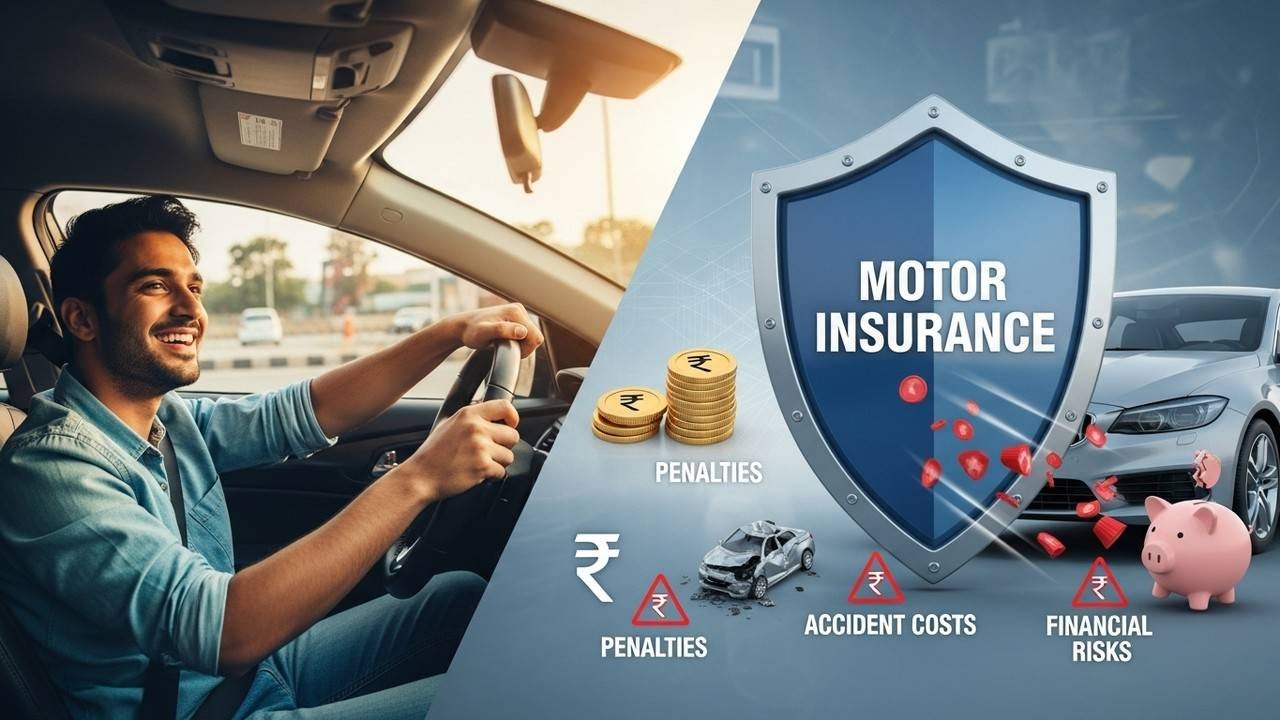
When it comes to car ownership in India, insurance has too often been treated as an afterthought, a compulsory certificate to tick off once a year rather than a shield that secures one’s financial well-being. Yet the cost of getting this wrong is steep. A missed renewal date leaves lakhs of vehicles on Indian roads exposed to penalties, legal trouble, and most importantly, the crushing financial liability of an accident. Against this backdrop, long-term motor insurance plans, particularly the bundled 3+3 model, are quietly emerging as a transformative solution, one that simplifies ownership, locks in savings, and brings much-needed stability to a space often plagued by forgetfulness and rising risks.
The Evolving Landscape of Indian Motor Insurance
For many car owners in India, motor insurance has historically been viewed as a mere administrative hurdle, a mandatory annual renewal rather than a crucial financial safeguard. This perspective, however, overlooks the substantial risks associated with inadequate coverage. Failing to maintain an up-to-date policy can lead to significant penalties, legal entanglements, and, most critically, devastating financial exposure in the event of an accident. In this complex environment, long-term motor insurance plans, particularly the integrated 3+3 year model, are emerging as a significant innovation. They offer a streamlined approach to car ownership, promise cost savings through locked-in premiums, and introduce a much-needed element of predictability in a sector frequently challenged by owner forgetfulness and escalating risks.
Deconstructing the 3+3 Policy Structure
The foundational element of long-term motor insurance is the 3+3 bundled plan. This structure consolidates three years of own-damage coverage with three years of third-party liability coverage. By aligning these two critical components, the plan eradicates the confusion arising from staggered renewal dates, a common pitfall for many vehicle owners. The third-party liability component is legally mandated and its pricing is set by government regulations, ensuring a degree of inherent stability. In contrast, the own-damage cover is subject to market dynamics, influenced by factors such as vehicle type, geographical location, an individual’s claims history, and chosen add-ons. Opting for a three-year term upfront provides policyholders with predictable premium rates, shielding them from the annual price fluctuations that are typical in the industry.
Ensuring Comprehensive Coverage Continuity
The primary advantage of these extended policies extends beyond mere cost reduction, though insurers do offer attractive discounts, often ranging from 10% to 15%, to encourage adoption. A more profound benefit lies in the structural efficiencies they introduce. When a motorist is assured of continuous coverage for multiple years, the risk of accidental policy lapses is significantly diminished. This is a critical consideration, as an uninsured vehicle faces not only penalties and legal issues but also potentially complex reinstatement procedures. Long-term policies effectively eliminate this pervasive uncertainty, offering peace of mind.
Streamlining the New Car Ownership Experience
For individuals purchasing new vehicles, the bundled long-term product offers an exceptionally smooth entry into ownership. It eliminates the need to track two distinct renewal timelines for liability and damage coverage and bridges the gap between regulatory mandates and market offerings. Essentially, it transforms the annual insurance renewal from a recurring obligation into a single, multi-year commitment that aligns more closely with how consumers approach other significant purchases, simplifying the overall car ownership experience.
Leveraging the No Claim Bonus Advantage
A powerful, yet often underappreciated, benefit in motor insurance is the No Claim Bonus (NCB). This reward system acknowledges claim-free policy years by offering a discount on the premium, starting at 20% and potentially reaching 50% by the fifth year. For prudent drivers, this translates into substantial long-term savings. Long-term insurance plans significantly enhance the accumulation of NCB. By maintaining continuous coverage, policyholders are less likely to forfeit their accumulated bonus due to policy lapses or fragmented coverage. Furthermore, the availability of add-ons like NCB protectors ensures that even an unavoidable claim does not negate years of accrued benefits. This creates a positive feedback loop: responsible driving leads to fewer claims, which in turn reduces premiums, and the continuity of a long-term policy solidifies these financial gains.
Navigating Road Risks with Stable Protection
The imperative for long-term motor insurance is amplified by the inherent unpredictability of driving conditions in India. Accident rates remain a persistent concern, urban traffic density contributes to frequent minor collisions, and extreme weather phenomena, such as intense monsoons and flash floods, are becoming increasingly common. The financial repercussions of insufficient insurance coverage in such a volatile environment can be catastrophic. A bundled long-term policy establishes a stable and comprehensive safety net that directly addresses these realities. It serves not just as a contractual obligation but as a vital risk management strategy for households across all economic strata.
- 01
- 02
- 03
- 04
Embracing the Future of Motor Insurance
With India’s automotive sector experiencing robust growth, leading to millions of new vehicles entering the market annually, the demand for insurance solutions that are both practical and protective will undoubtedly escalate. Long-term insurance plans, particularly the 3+3 bundled model, represent a forward-thinking framework that harmonizes regulatory requirements with market-driven innovations. These plans offer robust protection against unforeseen financial burdens, incentivize safe driving practices, and alleviate the administrative complexities that have historically left many drivers vulnerable. For Indian car owners, the decision is no longer simply about adhering to regulations versus neglecting them. It is a choice between cyclical annual uncertainty and the enduring security offered by long-term protection. Consequently, embracing long-term motor insurance is not merely an alternative; it is a transformative step toward responsible and secure vehicle ownership.
Final Thoughts on Long-Term Motor Insurance
The transition towards long-term motor insurance, especially the 3+3 bundled plan, signifies a crucial evolution in how car owners in India approach vehicle protection. By consolidating own-damage and third-party liability coverage, these plans simplify the renewal process, offer tangible cost savings through discounts and protected NCB, and provide essential financial stability in an increasingly unpredictable environment. The benefits, ranging from avoiding penalties and legal issues to securing substantial savings over time, make a compelling case for adopting this model. For any responsible car owner seeking to safeguard their financial well-being and ensure continuous protection, long-term motor insurance presents a clear and advantageous path forward, marking a significant departure from the traditional yearly renewal approach.
|
Aspect |
Description |
|
Policy Structure |
Bundled 3+3 year plan: Combines 3 years of own-damage cover with 3 years of third-party liability cover. |
|
Third-Party Liability |
Mandated by law; pricing is government-regulated, ensuring stability. |
|
Own-Damage Cover |
Market-driven pricing based on vehicle type, location, claims history, and add-ons. |
|
Financial Benefits |
Upfront discounts (10-15%), predictable premiums, protection against annual fluctuations. |
|
No Claim Bonus (NCB) |
Accrues for claim-free years (20% to 50%); long-term plans facilitate uninterrupted accumulation. |
|
Risk Mitigation |
Prevents accidental lapses, avoiding penalties, legal issues, and complex reinstatement. |
|
Convenience |
Simplifies ownership by converting annual chore to a multi-year commitment, ideal for new car buyers. |
|
Market Context |
Addresses increasing accident rates, urban congestion, and extreme weather events in India. |
|
Overall Value |
Transforms insurance from a compliance task to a long-term security measure. |
From our network :
- Pat Gelsinger Joins Gloo: Leading AI Initiatives for Faith-Based Organizations
- Find Sybase Stored Procedures: Efficient Search Techniques
- Pandas Data Cleaning: Efficiently Handling NaN Values with Cyclical Patterns
- Meteorite from Lost Planet: New Discovery Reveals Ancient Solar System Secrets
- Which gas is usually liberated when an acid reacts with a metal? Illustrate with an example. How will you test for the presence of this gas?
- Tragedy in the Sky: The NASA T-38 Crash and Its Impact
- 01
- 02
- 03
- 04
- 05
- 06
- 07
- 08
0 Comments