


Russia Ukraine peace talks: Alaska Summit and Strategy
- Aug 24, 2025
- 11 min read
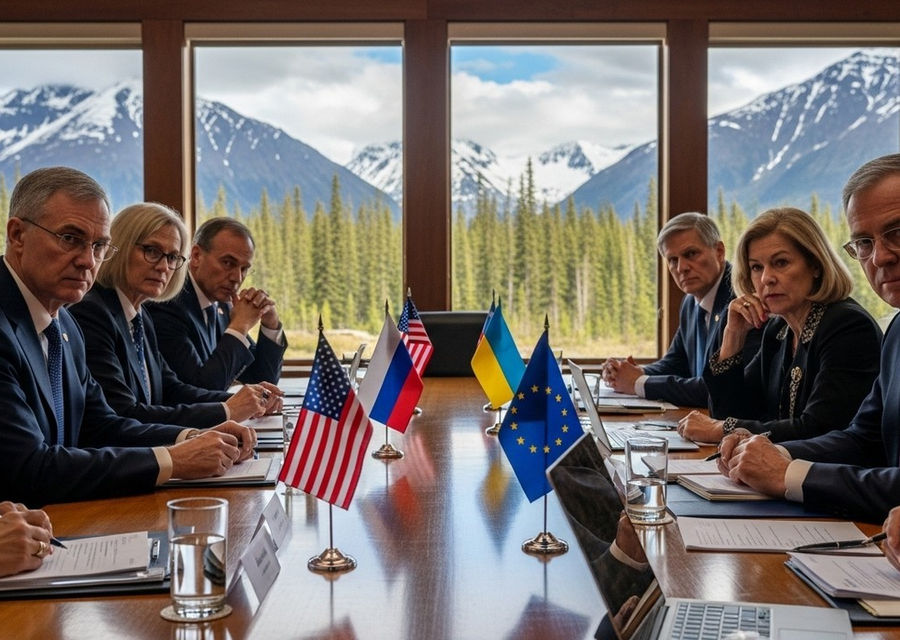
Russia Ukraine peace talks have climbed to the top of policy agendas worldwide, drawing scholars, diplomats, and journalists into a dense web of promises, warnings, and meticulous calculations. As the Alaska summit looms, the world watches how capital cities coordinate messaging, verify commitments, and translate political resolve into tangible safeguards for civilians. The stakes extend beyond borders, touching the integrity of international law, economic resilience, and the credibility of alliances that have stood since the Cold War. In this lens, diplomacy becomes both a craft and a test of collective resolve. The Russia Ukraine peace talks embody a moment when rhetoric, pressure, and patience must align to avert a humanitarian crisis.
Beyond the headlines, the mechanisms of negotiation demand careful sequencing, credible guarantees, and inclusive participation. In this setting, the question is not only who concedes what, but how Europe, the United States, and regional actors frame red lines, monitoring, and enforcement. The Alaska forum signals a shift toward diplomacy that values multilateral input while preserving Kyiv's sovereignty. As European leaders insist that Ukraine remain at the center, the conversation expands from tactical ceasefires to a broader architectural vision—covering security assurances, economic resilience, and the political legitimacy of any end-state.
Russia Ukraine peace talks: A Diplomatic Chessboard
Diplomacy in this arena reads like a high-stakes chess match where every move carries strategic weight and every counter move is weighed against potential consequences for civilians and regional stability. The Alaska context adds a layer of complexity as partners attempt to synchronize domestic constraints with collective commitments. The overarching aim remains clear: to translate political will into durable arrangements that deter renewed fighting while preserving Ukraine’s sovereignty. In this balancing act, signals of flexibility, patience, and reliability shape the tempo of negotiations and influence nearby capitals’ risk appetites.
Historical Landscape of Russia Ukraine peace talks
The long arc of diplomacy surrounding this crisis helps explain why current discussions carry so much weight. Past bargaining sessions, ceasefire attempts, and interim understandings show how trust evolves in fits and starts, often requiring tied commitments on security guarantees, territorial considerations, and international oversight. When analysts scrutinize the history of Russia Ukraine peace talks, they see patterns of escalation and de-escalation that illuminate what is realistically negotiable and what demands steadfast Western backing. This historical lens informs expectations for the Alaska moment and its aftermath.
Historical threads reveal a pattern of conditional concessions that hinge on credible enforcement and reciprocal steps. Negotiators weigh the optics of concessions against the humanitarian costs of continuing conflict, recognizing that a durable peace demands more than a temporary pause. The record underscores the value of inclusive dialogue that brings Ukraine into the room as an equal partner, even as external powers shape the framework and benchmarks for progress. From these lessons emerges a cautious optimism about the potential for a balanced settlement.
Stakeholders and Their Stakes in Russia Ukraine peace talks
Ukraine seeks to preserve its territorial integrity while gaining security assurances that deter future incursions. European allies aim to sustain a unified front that safeguards regional stability and upholds international norms, all without triggering a shift that would unravel NATO cohesion. The United States weighs strategic influence against domestic political considerations, hoping to sustain pressure without estranging Kyiv or its partners. Russia presents a different calculus, balancing its strategic objectives with the risk of renewed sanctions and diplomatic marginalization. In this crowded field, every stake is tied to a broader question of legitimacy and long-term peace architecture.
The Alaska discussions bring into relief how these competing stakes translate into concrete terms—ceasefire timetables, verification mechanisms, and guarantees that satisfy both sovereignty and security concerns. For Ukraine, the path forward is inseparable from international assurances; for Europe, the question is whether its security architecture can adapt quickly enough to a changing geopolitical rhythm. In this dynamic, stakeholders must translate rhetoric into measurable commitments, while maintaining the flexibility to respond to unfolding events on the ground and in the negotiations room.
Geopolitical Pressures Shaping Russia Ukraine peace talks
Geopolitical currents push all actors toward a delicate equilibrium in the Russia Ukraine peace talks, where timing and messaging can either accelerate progress or stall it at the brink of stalemate. The Alaska initiative places a premium on coordination among Western allies, yet it also risks triggering friction if domestic constituencies push hardline positions. The interplay between public statements and private assurances becomes a central feature of this dynamics, testing how leaders manage expectations while safeguarding strategic interests. The outcome hinges on a mix of diplomatic theater and substantive guarantees that can withstand political scrutiny.
European Voices in Russia Ukraine peace talks
European capitals perceive a strong imperative to remain actively involved, given the continent’s exposure to potential spillovers from the conflict. EU leaders emphasize that Ukraine’s security is inseparable from European stability, pressing for a framework that preserves sovereignty and minimizes humanitarian costs. They also seek pragmatic pathways for mediation, ensuring that any agreement aligns with European security guarantees and the continent’s broader strategic goals. This posture reflects a balance between moral obligation and practical risk management in an era of shifting alliances.
France, Germany, and other European partners advocate for a synchronized approach that respects Ukraine’s agency while leveraging their own security guarantees. They argue that European participation is not optional but essential for legitimacy and enforcement. The Alaska discussions heighten these concerns, underscoring the need for transparent processes, robust verification, and credible enforcement mechanisms that reassure both Kyiv and European publics. Europe’s active role signals a lasting shift in how regional powers view their security responsibilities within a global power competition.
US Leadership and the Alaska Window in Russia Ukraine peace talks
US leadership remains a decisive variable, shaping the tempo and scope of negotiations. Washington seeks to demonstrate unity with European partners while preserving leverage that could influence Russia’s calculus. The Alaska setting is viewed as a testing ground for how the United States can marshal allies, manage domestic political considerations, and project a coherent strategy that keeps Kyiv engaged without provoking a broader confrontation. The balance of diplomacy and deterrence sits at the heart of the administration’s approach.
Officials caution that the Alaska moment is not a single dramatic breakthrough but a phased effort to build a framework that can endure political fluctuations. The aim is to lay groundwork for sustained dialogue, with concrete milestones and verification processes that reduce misinterpretations and miscalculations. In this sense, US leadership is less about forcing a deal and more about enabling a credible, multi-lateral path toward a durable peace that respects Ukraine’s sovereignty and regional security imperatives.
Security Guarantees and Territorial Questions in Russia Ukraine peace talks
Security guarantees and territorial questions sit at the core of the negotiation texture, shaping every proposed clause and each conditional commitment. The Alaska talks intensify the demand that any ceasefire be backed by ironclad assurances, including credible verification and a plausible path to long term stability. Participants weigh the consequences of permanent demilitarization versus guarantees that deter future aggression, seeking a balanced arrangement that minimizes civilian harm while upholding strategic norms. The security architecture under discussion may redefine regional risk for years to come.
Security guarantees and NATO implications in Russia Ukraine peace talks
One of the most contentious axes is whether Ukraine should receive security guarantees tied to a formal NATO pathway or a comparable regional framework. Advocates argue that a credible security promise is indispensable to dissuade future incursions and to reassure European allies. Critics warn that rushed commitments could trigger strategic misinterpretations or provoke a stronger pushback from Moscow. The Alaska moment elevates the debate about how security guarantees will be monitored, enforced, and scaled to evolving threats in a volatile security environment.
In practical terms, negotiators examine options ranging from enhanced defensive postures and joint patrols to international observation regimes and phased demobilization. The aim is to craft a mechanism that can weather political upheavals in corresponding capitals while maintaining public confidence at home. Ultimately the question is not only what is guaranteed today but how those guarantees adapt to future risks, ensuring Ukraine’s security without provoking destabilizing escalations elsewhere.
Territorial concessions and the Donetsk question in Russia Ukraine peace talks
Territorial issues spark intense debate, particularly around Donetsk and adjacent areas. Negotiators seek a pathway that allows Ukraine to maintain sovereignty and territorial integrity while offering credible incentives for de-escalation. The Donetsk question looms large because it tests whether a framework can sustain political compromise without eroding the principle of national borders. Confidence-building steps, phased handovers, and reciprocal security guarantees are often cited as essential ingredients to prevent repeated disputes over land and identity.
Analysts caution that any concession must be tightly coupled with enforceable commitments and transparent monitoring. Without verifiable steps and external guarantees, territorial arrangements risk collapsing at the first sign of renewed tension. The Alaska process highlights the need for a gradual, well-defined sequence of moves that provides Ukraine with meaningful assurances while offering Moscow a clear, legally anchored path back to dialogue rather than unilateral action.
Economic and Strategic Levers in Russia Ukraine peace talks
Economic considerations often carve the contours of peace negotiations as much as security concerns do. Sanctions regimes, trade policies, and energy dependencies shape incentives for all sides and influence how a peace agreement can be sustained in practical terms. As decision-makers test various sequences, they evaluate how economic levers can support or undermine a durable ceasefire and postwar reconstruction. The Alaska framework invites a careful assessment of how financial resilience and investment confidence can be embedded into any lasting settlement.
Economic sanctions and leverage in Russia Ukraine peace talks
Sanctions diplomacy remains a potent tool, capable of pressuring behavior while risking collateral damage. Negotiators weigh calibrated steps that preserve humanitarian space and avoid prolonging hardship for civilians. The Alaska discussions probe whether coordinated sanctions relief could accompany concrete concessions, creating a reciprocal dynamic that incentivizes progress. The challenge is calibrating measures so they reinforce peace-building instead of becoming entrenched punitive mechanisms that harden positions.
Participants also explore how financial channels, access to technology, and investment conditions can be conditioned on compliance with ceasefire terms and security guarantees. The ultimate aim is to build a credible economic framework that supports transition, reconstruction, and long-term stability, rather than a punitive regime that deepens political and social fissures. The dialogue around sanctions thus becomes a test of whether economic policy can align with humanitarian and geopolitical objectives.
Energy security and supply chains as bargaining chips in Russia Ukraine peace talks
Energy interdependencies complicate the peace calculus, given Europe’s reliance on regional energy flows and the strategic leverage that energy promises can confer. Negotiators scrutinize how to decouple conflict dynamics from critical energy markets, while ensuring that any deal does not trigger unintended price shocks or supply disruptions. The Alaska framework acknowledges these vulnerabilities and contemplates transitional arrangements that preserve energy stability for European consumers and industrial sectors alike.
Supply chain resilience also enters the conversation, with discussions about diversification, strategic reserves, and transit routes that reduce exposure to political shocks. The objective is a pragmatic blueprint that minimizes disruption during the transition period and safeguards long-term economic health. By integrating energy and supply considerations into the peace talks, negotiators aim to translate strategic promises into tangible, everyday security for people across Europe and beyond.
Potential Scenarios Emerging from Russia Ukraine peace talks
As the discussions evolve, several scenarios loom, each with distinct implications for policy, security, and regional sentiment. The Alaska moment is often framed as a catalyst for narrowing gaps and clarifying nonnegotiable elements, while leaving room for incremental progress. Observers look for signs of shared language, verifiable milestones, and a credible enforcement architecture that can withstand political upheaval or renewed hostilities. The direction chosen will shape public expectations and the strategic posture of all major stakeholders in the years ahead.
Best-case scenario for Ukraine and Europe in Russia Ukraine peace talks
In the best-case scenario, Ukraine secures solid sovereignty guarantees, a credible security framework, and a phased path toward stability that minimizes civilian harm. Europe gains a clear role in shaping the security architecture and a tangible stake in reconstruction efforts, enhancing resilience and cohesion across member states. A credible, verifiable ceasefire would reduce casualties, stabilize markets, and open space for diplomatic normalization with neighboring powers, while preserving Ukraine’s independence and democratic trajectory.
Economic relief measures and targeted sanctions relief could accompany the agreement, signaling a return to constructive cooperation and investment in regional growth. Confidence would grow that the strategic balance has shifted away from perpetual crisis toward sustainable governance. The Alaska momentum would demonstrate that diplomacy can deliver concrete benefits without compromising core values or security commitments for European partners and their allies.
Worst-case scenario and contingency plans in Russia Ukraine peace talks
In the downside view, negotiations stall or unravel, leaving the front lines frozen and civilians bearing continued costs. A lack of credible enforcement could invite renewed clashes, eroding trust among Ukraine, Europe, and Washington. Markets might react to the absence of a clear road map, amplifying economic uncertainty and energy volatility. The risk is that rivalries among major powers harden, making future talks more difficult and delaying any meaningful path to settlement.
Contingency planning in this scenario centers on safeguarding humanitarian access, maintaining strategic deterrence, and preserving channels for back-channel diplomacy. Analysts emphasize the importance of preserving a robust diplomatic channel even when public progress stalls, ensuring that quiet, ongoing discussions remain resilient to political storms. The Alaska moment would then function not as a failure but as a baseline from which negotiations could re-enter a more favorable trajectory.
The Final Solution: Charting a durable path in Russia Ukraine peace talks
A durable, credible peace hinges on a robust framework that outlasts political cycles and local storms, offering Ukraine a secure horizon and Europe a predictable security environment. The final arc of Russia Ukraine peace talks requires a synthesis of legal guarantees, verification protocols, governance structures, and sustained economic support for stabilization and reconstruction. The objective is a balanced agreement anchored in sovereignty, human rights, and transparent international oversight that can weather future shocks and uphold international norms.
Long-term framework and governance in Russia Ukraine peace talks
The long-term framework envisions a multi-layered arrangement: a formal ceasefire with time-bound milestones, an enhanced security architecture, and an intergovernmental mechanism for ongoing dialogue. Governance structures would coordinate between Kyiv, regional authorities, and international partners, reducing ambiguity and building trust through predictable processes. This framework must be adaptable, allowing for progressive milestones as confidence grows and new realities emerge on the ground. Transparency and accountability would be the pillars sustaining legitimacy over time.
In practice, the governance model would include independent verification, joint monitoring missions, and clear dispute-resolution procedures. It would also integrate humanitarian and economic dimensions, ensuring that reconstruction and reform become inseparable from security guarantees. The end state is a durable peace that protects sovereignty, upholds human rights, and secures a stable regional order that can resist renewed aggression or destabilizing shocks.
Monitoring, verification and enforcement in Russia Ukraine peace talks
Verification is the linchpin of any lasting agreement. A credible monitoring regime must be transparent, technically capable, and politically legitimate, with buy-in from Kyiv, Moscow, and international partners. The Alaska forum highlights the need for robust verification tools, cross-border inspections, and timely data sharing that rebuilds trust after years of mistrust and miscommunication. Without credible enforcement, even well-intentioned commitments risk unraveling at the first sign of pressure.
Section | Core Takeaway |
Russia Ukraine peace talks: A Diplomatic Chessboard | Diplomacy as strategic maneuver; Alaska as a testing ground for inclusive, credible commitments. |
Geopolitical Pressures Shaping Russia Ukraine peace talks | European voices and US leadership converge to balance sovereignty, security, and alliance cohesion. |
Security Guarantees and Territorial Questions in Russia Ukraine peace talks | Ceasefire, NATO considerations, and Donetsk questions shape long-term stability and borders. |
Economic and Strategic Levers in Russia Ukraine peace talks | Sanctions, energy security, and supply chains influence incentives and postwar recovery plans. |
Potential Scenarios Emerging from Russia Ukraine peace talks | Best-case path leans toward verified ceasefire and reconstruction; worst-case risks stall and rebound conflict. |
The Final Solution: Charting a durable path in Russia Ukraine peace talks | A lasting framework with governance, verification, and sustained support for stability. |
Monitoring verification and enforcement | Robust, transparent mechanisms ensure the agreement endures beyond political cycles. |


Comments