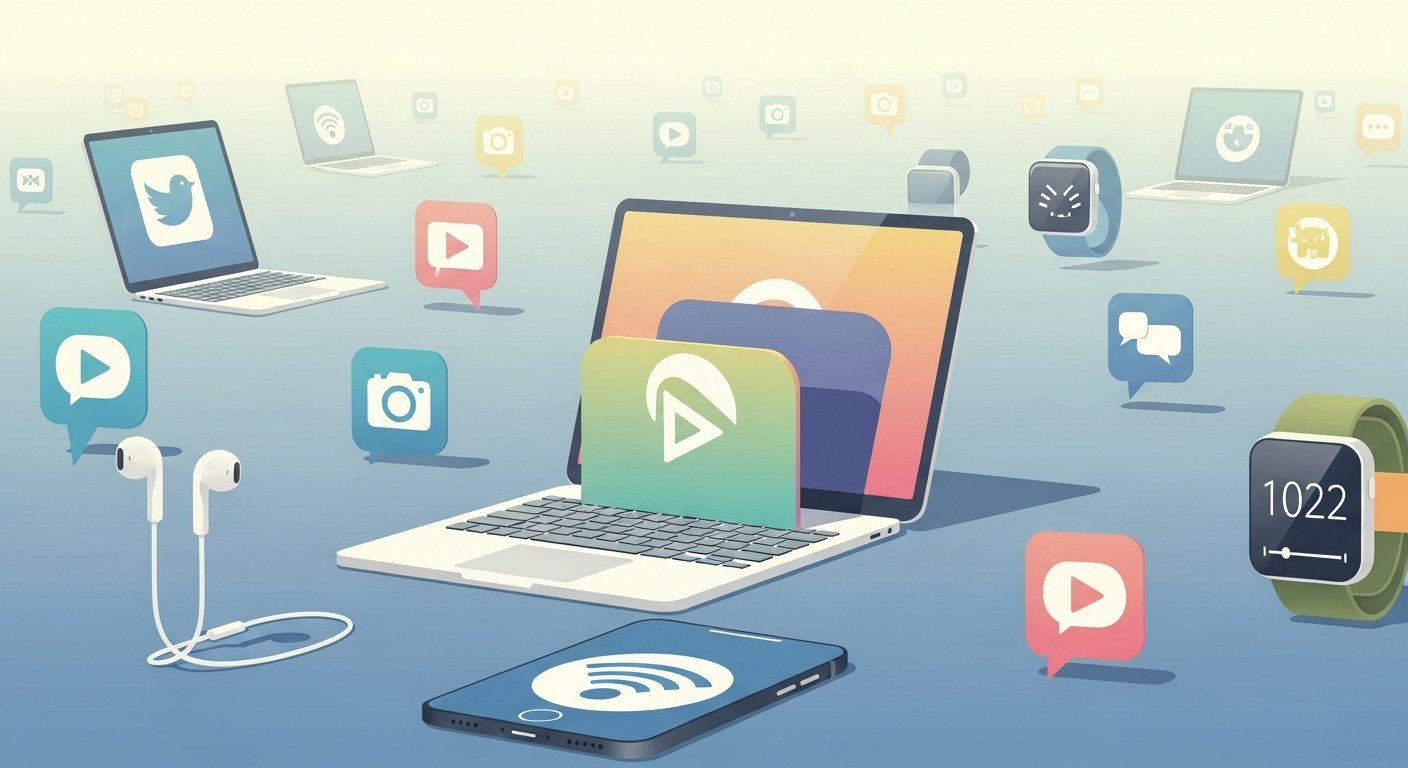
Quick, open your favorite app. Now, open another one. Don’t be surprised if you experience a curious case of déjà vu. Perhaps a bottom navigation bar here, a rounded card there, a gentle sans-serif font like Inter or Roboto, basking in a palette of neutral pastels or sleek gradients. Scroll enough, and you might start to wonder if the same design team moonlights for every tech giant, armed with a single, highly effective, yet mysteriously uninspired template kit.
Now, let’s brave the wilds of the offline world. Glance at your laptop, your phone, your smartwatch, your wireless earbuds. Can you honestly tell them apart at a distance? Most are sleek rectangles, often clad in brushed aluminum or glass, sporting those ubiquitous rounded corners. Even cars, once bastions of bold, distinct identities, seem to be steadily converging into aerodynamic, efficiency-optimized blobs, as if sculptors across the globe suddenly agreed on the ultimate form for “moving box.”
No, it’s not your imagination playing tricks. From the pixelated realms of websites and apps to the tangible universe of physical products, everything seems to be coalescing into a sort of “global design template.” It’s clean. It’s functional. It’s predictably polite. But, dare we whisper it? It’s also, at times, a tad… boring.
We find ourselves in an era where innovation often feels more like meticulous iteration, where the wild untamed spirit of originality is gently sanded down, buffed, and polished into submission in the name of scalability, safety, and that warm, fuzzy feeling of familiarity. The burning question remains: why did design, once a vibrant playground of experimentation and unapologetic rule-breaking, decide to don a uniform?
The Uncanny Valley of Visual Similarity: A Grand Tour of Sameness
It’s everywhere, isn’t it? The digital landscape, once a riot of GeoCities pages and Flash animations (may they rest in peace), now presents a remarkably cohesive, almost parliamentary, aesthetic. Imagine a line-up where every suspect claims to be unique, but they all share the same haircut, eyewear, and suspiciously comfortable-looking neutral-toned cardigan. That’s our apps. That’s our devices.
Beyond the Instagrams, Threads, TikToks, and LinkedIns, consider the humble e-commerce site. Many now feature clean, grid-based layouts, oversized product images, and “Add to Cart” buttons that adhere to a similar visual language. Streaming platforms? Often dark modes, carousel sliders, and neatly categorized content. Even smart home devices, from thermostats to doorbells, follow a minimalist, unobtrusive design philosophy, as if trying to blend into your wall until absolutely necessary. And don’t even get us started on the coffee shops. While not digital, their interiors often echo this trend: industrial chic, exposed brick, Edison bulbs, and a minimalist menu board.
The ubiquity of certain design elements isn’t accidental. Those rounded cards aren’t just an aesthetic choice; they’re often interpreted as softer, more approachable, and less aggressive than sharp angles. Bottom navigation bars? A godsend for the thumb-stretching generation, offering ergonomic bliss. And the fonts? Sans-serifs like Inter, Roboto, and Helvetica Neue are chosen for their readability across various screen sizes and resolutions, whispering professionalism and clarity. The neutral pastels and subtle gradients? They convey a sense of calm, modernity, and premium quality, far removed from the neon anarchy of yesteryear.
The result is a world of interfaces and objects that are undeniably user-friendly, efficient, and aesthetically pleasing in a generalized way. But it’s also a world where brand identity, once screamed from every pixel and curve, now feels like a muted murmur. Is my phone merely a smaller, touch-enabled extension of my sleek, flat laptop, which itself is but a slightly more angular version of the car I drive, designed more for efficiency than for turning heads? The thought is enough to make a design enthusiast shed a single, perfectly rendered, teardrop icon.
The Master Chefs of Monotony: Decoding the ‘Why’
So, who are these puppet masters pulling the strings of global design? Is there a secret society of designers, meeting in a clandestine bunker, meticulously crafting the next universally acceptable shade of ‘greige’ or the optimal radius for a button’s corner? Probably not. The reasons are far more prosaic, rooted in a complex stew of psychology, economics, and technological evolution.
The Comfort Blanket of Cognitive Ease
One of the primary drivers behind design convergence is deceptively simple: human psychology. We, as users, are inherently lazy. Not in a bad way, mind you, but our brains are wired for efficiency. We prefer patterns, predictability, and anything that reduces cognitive load. Why learn a new interface when the one you’re using feels like an old friend? This is the essence of Jakob’s Law of Internet User Experience, which states that users spend most of their time on other sites, and therefore prefer your site to work the same way as all the other sites they already know.
When every app, website, or device functions in a similar way, it’s like having a universal remote control for the digital world. The ‘back’ button is usually in the top left or a swipe gesture. The ‘settings’ icon looks like a cog. The ‘menu’ is typically three horizontal lines. These are not coincidences; they are battle-hardened conventions born from countless hours of user testing and observation. Designers discovered that deviating too much from these established patterns leads to user frustration, higher bounce rates, and frantic support calls. So, why reinvent the wheel, or in this case, the scroll bar, when generations of users have already mastered its subtle nuances? It’s less about lack of imagination and more about a collective sigh of relief from our brains, grateful for not having to learn a new language every time we open a new digital door.
This pursuit of cognitive ease leads to a positive feedback loop: users prefer familiar designs, so designers create familiar designs, which reinforces user preference. It’s a beautifully efficient, if slightly unadventurous, cycle. We’ve collectively, and perhaps unconsciously, voted for ease of use over groundbreaking aesthetics.
The Economic Engines of Efficiency
Beyond user comfort, the cold, hard realities of business play an enormous role. In the fast-paced world of technology, time is money, and efficiency is king. Creating unique, custom designs for every single element across an entire ecosystem of products is not only time-consuming but incredibly expensive and prone to inconsistencies.
Enter the hero of the hour (or villain, depending on your perspective): the design system. Frameworks like Google Material Design or Apple’s Human Interface Guidelines aren’t just suggestions; they are comprehensive rulebooks, complete with reusable components, spacing guidelines, typography hierarchies, and color palettes. For developers and designers, these systems are a godsend. They allow teams to build new features and products at lightning speed, ensuring consistency across platforms and reducing the likelihood of errors. It’s like having a LEGO set where all the pieces fit together perfectly, every time.
For physical products, the story is similar. Economies of scale dictate that using standardized components, materials (like brushed aluminum or glass), and manufacturing processes significantly reduces production costs. Why design a completely novel chassis for every laptop model when a slightly tweaked version of an existing, efficient design will suffice? This not only streamlines production but also simplifies supply chains and quality control. The pursuit of sleek, unibody construction, while aesthetically pleasing, also often translates to fewer seams, fewer parts, and easier assembly, ultimately benefiting the bottom line. It’s a testament to the idea that sometimes, the most elegant solution is also the most cost-effective.
The Data-Driven Descent into Duplication
In our increasingly data-obsessed world, design decisions are rarely left to artistic whim. They are, more often than not, dictated by the relentless march of metrics and the cold, hard logic of A/B testing. Every pixel, every button, every color shade can be tested to see which version performs “best” – meaning, which version leads to more clicks, longer engagement, or higher conversions. When thousands or millions of users are subjected to these tests, the “optimal” solutions tend to emerge, and guess what? They often look remarkably similar across different platforms.
If data consistently shows that a rounded button with a subtle drop shadow performs better than a sharp-edged, flat one, then rounded buttons with subtle drop shadows will proliferate. Companies, particularly those with vast user bases, are understandably risk-averse. They’re hesitant to gamble on a radical design overhaul when a proven, data-backed approach guarantees a certain level of success. The algorithms aren’t just suggesting content; they’re subtly influencing the very aesthetic of our digital lives. The algorithm says you’ll like this rounded button. Don’t ask why, just click. The tyranny of ‘best practices,’ forged in the fires of user analytics, often leads to a convergence towards the statistically most effective, if not always the most exciting, design.
- 01
- 02
- 03
- 04
A Brief (and Amusing) History of ‘Original’ Extinction
Cast your mind back, if you can, to the wild west days of the internet. The late 90s and early 2000s were a glorious, chaotic explosion of individualism. Websites looked like a unicorn threw up glitter and animated GIFs. Frames, Flash intros, Comic Sans, and background music that autoplayed (usually midi versions of pop songs) were not just common; they were celebrated. Every designer was a rebel, and every webpage was a unique, often jarring, personal statement. Functionality? Secondary. Aesthetics? Subjective. Personal expression? Absolutely.
Then came the smartphones, the app stores, and the stern, disapproving gaze of usability experts. Slowly but surely, the wild gardens of the internet were paved over and replaced with neatly manicured lawns. The era of skeuomorphism (where digital objects mimicked real-world counterparts, like a notepad app that looked exactly like a physical notepad) gave way to flat design, then material design, and then a general, minimalist sleekness. It was like watching a collective agreement to grow up, put away the crayons, and embrace the professionalism of Helvetica.
Physical products followed a similar trajectory. Remember when cars had fins, chrome galore, and dashboards that looked like command centers from a sci-fi B-movie? Or when home appliances were beige, bulky, and designed to look utterly utilitarian? Today’s vehicles, while safer and more efficient, often require a second glance to distinguish brands beyond their badges. Appliances strive for sleek, integrated designs that almost disappear into your kitchen. It’s a testament to progress, certainly, but also a nostalgic nod to a time when designers seemed to be on a sugar rush, convinced that more was always, unequivocally, more.
The humor in this evolution lies in our collective journey. We once yearned for the outrageous, then we collectively recoiled from the functional nightmares it sometimes created. The pendulum swung hard towards efficiency and usability, and now we find ourselves in a landscape where everything works brilliantly, but sometimes, we miss the quirky, slightly inconvenient charm of the past. It’s like discovering that all your favorite musicians have started producing the same genre of incredibly well-produced, technically flawless, but emotionally sterile music.
The Great Design Paradox: What Have We Gained, What Have We Lost?
This grand convergence of design is, like most phenomena of our interconnected age, a double-edged sword. It offers a bouquet of benefits while simultaneously pruning away some cherished elements.
What We’ve Gained: The Unsung Heroes of Sameness
- Unprecedented Ease of Use:The learning curve for new apps or devices has been flattened to a gentle slope. If you can use one smartphone, you can likely navigate any of them. This is a monumental win for accessibility and overall user satisfaction.
- Accessibility for All:Standardized design patterns, clear typography, and consistent iconography significantly improve usability for individuals with various cognitive and physical abilities.
- Reduced Cognitive Load:Our brains aren’t constantly trying to decipher novel interfaces, freeing up mental bandwidth for the actual tasks we want to accomplish. No more squinting at oddly placed buttons or guessing what an obscure icon means.
- Perceived Professionalism and Trust:Clean, minimalist designs often convey a sense of reliability, professionalism, and trustworthiness. Jumbled, chaotic interfaces, by contrast, can evoke feelings of amateurism or even suspicion.
- Faster Iteration and Innovation (of Features):With the UI fundamentals largely standardized, designers and developers can focus their energy on innovating features and functionalities, rather than constantly reinventing the visual language.
What We’ve Lost: The Quirky Sacrifices on the Altar of Uniformity
- Loss of Brand Distinctiveness:When every app looks vaguely similar, it becomes harder for brands to establish a unique visual identity that truly sets them apart. They risk becoming interchangeable cogs in the vast digital machine.
- Diminished Delight and Surprise:The thrill of encountering a truly novel or eccentric design has largely faded. The predictable nature, while efficient, can sometimes feel sterile, devoid of the unexpected charm that once characterized digital exploration.
- Perceived Lack of Innovation:From a consumer perspective, if everything looks the same, it can create the impression that the industry as a whole is stagnating, even if underlying technological innovations are rampant.
- The ‘Soulless’ Interface:While functional, these highly optimized, template-driven designs can sometimes feel impersonal, lacking a certain ‘soul’ or human touch that more experimental designs, even flawed ones, might possess.
- Creative Stagnation:A reliance on established templates and ‘best practices’ can inadvertently stifle truly groundbreaking design thinking. The comfort of conformity can make stepping outside the mold feel daunting or unnecessary.
It’s like everyone agreed on a universal uniform for the digital age: clean, comfortable, and utterly forgettable. We’ve traded the vibrant, sometimes garish, carnival of design for a meticulously curated, exquisitely beige art gallery. It’s undeniably elegant, but after a while, you start longing for a splash of neon or a rogue polka dot.
Beyond the Blur: Whispers of Rebellious Pixels?
So, where do we go from here? Are we doomed to a future where every digital interaction and physical object is merely a slight variation on a globally accepted theme? Will the aesthetics of tomorrow be decided purely by the algorithms, leaving human creativity to ponder what shade of off-white is ‘most optimal’?
Not necessarily. History, particularly design history, is cyclical. The pendulum rarely stays put for long. Just as brutalism emerged as a stark contrast to ornate architectural styles, and then gave way to more human-centric designs, we’re already seeing whispers of a counter-movement. Think of the recent flirtations with ‘neomorphism,’ a style that attempts to blend skeuomorphism with flat design, creating soft, extruded button-like elements. Or the occasional, daring forays into digital brutalism, deliberately rejecting traditional aesthetics for a raw, almost deconstructed feel. These might be niche, perhaps fleeting, trends, but they represent an undeniable hunger for something different, something that pushes back against the pervasive homogeneity.
The future of design will likely be a fascinating dance between the undeniable benefits of standardization and the enduring human desire for novelty, distinctiveness, and emotional connection. Perhaps customization will become the new battleground, allowing users to personalize their experiences within a robust, standardized framework. Or maybe, true innovation will lie not in reinventing the interface, but in designing for entirely new sensory experiences that transcend the visual.
For now, we navigate our world of sleek rectangles and rounded corners, benefiting from their efficiency and intuitiveness, even as we occasionally yearn for a splash of the unexpected. The global design template might be here to stay, but the human spirit, ever curious and occasionally rebellious, will always seek ways to scribble outside the lines. The question isn’t whether design will change, but rather, what audacious, delightful, or hilariously impractical forms it will take next. Will you be ready to embrace the next great design rebellion, or will you instinctively reach for the familiar?
- 01
- 02
- 03
- 04
- 05
- 06
- 07
- 08
0 Comments