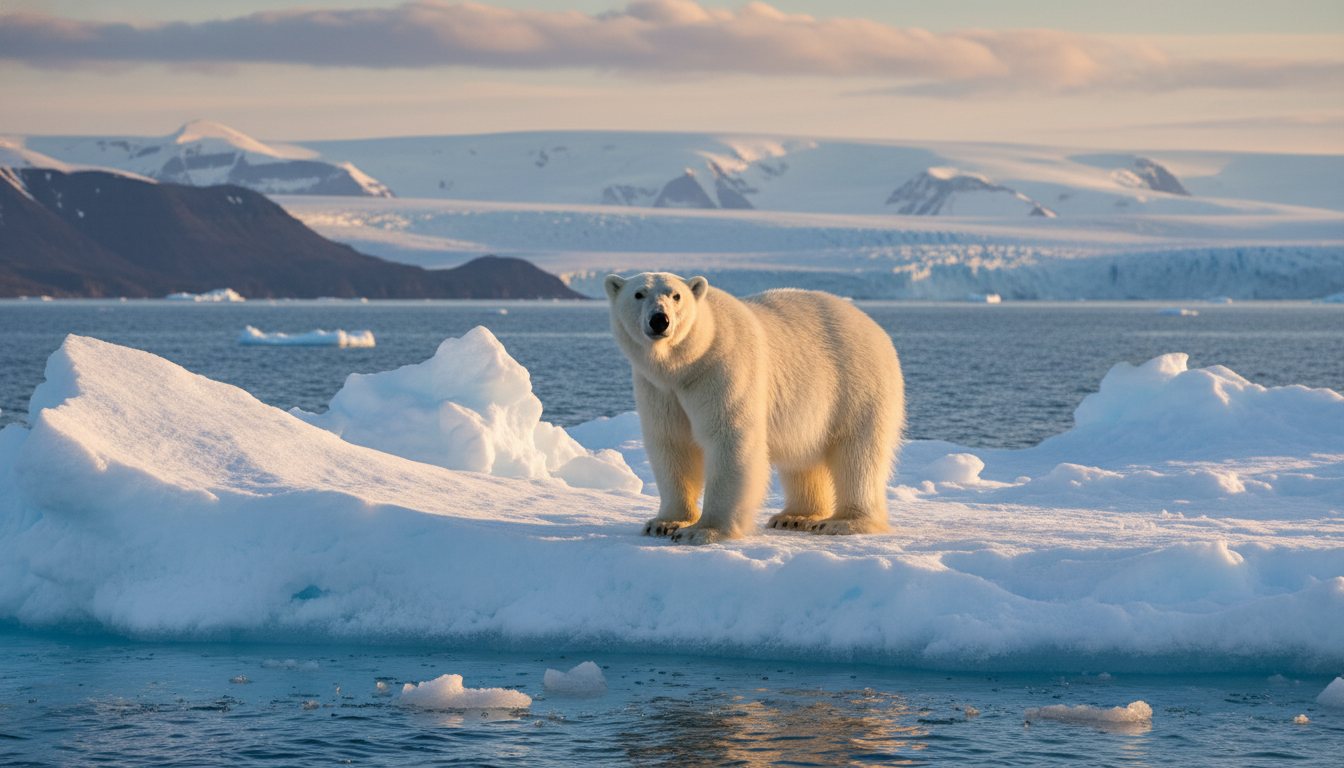
For generations, Antarctica has functioned as a clean line in the human story: the last continent, reached only in the modern era and inhospitable to preindustrial life. That assumption anchored textbooks, museum maps, and a broad consensus that—whatever humans did elsewhere—they never set foot on the southernmost landmass until the age of sail.
Now a changing climate is prying open the “Antarctic Archive.” As ice pulls back from rocky coastal margins of the Antarctic Peninsula, archaeologists are confronting evidence that looks uncomfortably familiar: patterned stone flakes, clustered fire-cracked rock, and charred organics from hearth-like features. The question is no longer only whether these objects are real, but what they mean for prehistoric mobility, seafaring capability, and the limits of human adaptation.
At the same time, the find arrives under uniquely fragile conditions. Unlike many terrestrial sites preserved by dry caves or deep sediment, these materials were entombed by ice—protected until the moment they were exposed to wind, meltwater, and salt spray. The race to study them is also a race against loss.
1) The “Antarctic Archive” and why melting ice can rewrite world history
Ice as a time capsule: what glaciers preserve that soil often can’t
Glacial ice can preserve archaeological traces with a fidelity that many land environments cannot. Where soils churn through freeze–thaw cycles, vegetation growth, animal burrowing, and microbial decay, cold-based ice can seal organic materials, micro-debris, and spatial patterns for millennia. In effect, the ice becomes a museum storage vault—dark, stable, and cold—where even subtle traces can survive: tiny charcoal flecks, residues absorbed into stone, or the fragile geometry of a hearth built quickly and abandoned.
This is why melting margins often deliver “surprise archives.” Around the world, retreating ice has released artifacts ranging from ancient hunting gear to textiles and wooden tools. What makes the Antarctic Peninsula exposure so significant is not merely the quality of preservation but the geographical premise it challenges. Antarctica has been treated as a hard boundary for prehistory. A single well-documented campsite can force historians to redraw that boundary; multiple sites, across distinct localities, can transform an anomaly into a pattern.
There is also a methodological reason ice-revealed sites are unusually instructive. They often present artifacts in near-original position—less disturbed by centuries of erosion and human reuse. If a hearth feature is truly intact, its charcoal can provide direct dating, and its spatial relationship to tools can help confirm association. That association matters: a radiocarbon date is only as meaningful as the confidence that the dated material relates to the human activity in question.
What exactly was found on the Antarctic Peninsula (and what it suggests)
Reports from the January 2026 field season describe several discrete exposures along recently deglaciated coastal terraces of the Antarctic Peninsula. The materials include:
• Stone artifacts: Flaked stone pieces consistent with tool production or maintenance—cores, flakes, and potential retouched edges. The key diagnostic is patterning: repeated striking platforms, conchoidal fractures, and edge-wear suggest intentional knapping rather than random breakage.
• Hearth indicators: Clusters of fire-cracked rock, concentrated charcoal-like residues, and localized darkened sediment lenses. In polar contexts, repeated thermal cycling can fracture rock in distinctive ways; when paired with charred organic matter, a human-made fire becomes plausible.
• Organic remains: Carbon-datable material described as charred organics and possibly lipid residues in sediments. If these prove to be wood, sea mammal fat, or other combusted fuel, they may reveal how heat was generated in a treeless environment.
Preliminary radiocarbon results reportedly point to around 4000 BCE. That timeframe falls within the mid-Holocene, when parts of the Southern Hemisphere experienced episodes of relative warmth and shifting sea-ice conditions. The crucial interpretive leap is not that Antarctica was “settled,” but that it may have been visited—briefly, opportunistically, and perhaps repeatedly in good years. A campsite is not a colony; it is evidence of reach, navigation, and survival strategy.
2) The dating problem: how archaeologists test a claim this extraordinary
Radiocarbon dating, reservoir effects, and why polar contexts are tricky
Extraordinary claims require unusually careful chronologies. Radiocarbon dating measures the decay of carbon-14, converting the remaining fraction into an age estimate. In simplified form, the relationship can be represented as:
where ##[t]## is time since death, ##[\lambda]## is the decay constant, and ##[N/N_0]## is the measured fraction of carbon-14 remaining. In practice, laboratories report radiocarbon ages that must then be calibrated to calendar years using calibration curves.
Polar and maritime environments introduce complications, especially the marine reservoir effect. Marine organisms can appear “older” in radiocarbon years because ocean carbon cycles differently than atmospheric carbon. If charred remains come from marine mammals or seabirds (or from fuel derived from them), dates can skew earlier unless corrected. Even some coastal food webs can carry reservoir offsets into terrestrial consumers, complicating interpretation.
That does not invalidate radiocarbon results—it simply raises the standard of proof. Investigators need to establish:
• What was dated (wood, bone collagen, soot, sedimentary organics)
• How it relates to the human activity (primary hearth charcoal vs. later contamination)
• Whether reservoir corrections apply (especially for marine-derived carbon)
In Antarctica, another challenge is contamination by modern carbon introduced through meltwater, microbial activity in newly thawed sediments, or even field handling. For that reason, high-confidence dating typically involves multiple samples from the same context, cross-checked by independent labs.
Confirming human presence: toolmarks, microwear, and geochemical fingerprints
Dating alone cannot prove humans were present; it can only place organic material in time. The human signature must come from the artifacts and their context. Archaeologists typically use a layered approach:
1) Lithic technology analysis: Intentional knapping leaves recurring features—striking platforms, bulbs of percussion, and systematic flake scar patterns. Random rock fracture from ice movement or thermal stress can mimic some features, so analysts look for consistent sequences and refitting possibilities (where flakes fit back onto a core).
2) Microwear studies: Under magnification, tool edges used for cutting, scraping, or drilling develop polishes and striations. Different worked materials (hide, wood, bone) can create distinct wear patterns. In this case, evidence of contact with animal tissue or plant fibers would be particularly informative.
3) Residue and biomolecular testing: Proteins, lipids, and microcharcoal can sometimes be identified. If a hearth residue shows biomarkers consistent with marine mammal blubber or bird fat, it might explain how heat was generated in a landscape without trees.
4) Sediment micromorphology: Thin sections of sediment can reveal ash structures, trampled surfaces, or repeated burning episodes. A naturally charred patch (for example, from lightning in other regions) has a different signature than a constructed hearth; in Antarctica, where natural fire is essentially absent, the presence of burning itself becomes a strong clue—provided it is clearly in situ.
When a claim overturns a long-held “never happened” assumption, the burden shifts from plausibility to reproducibility. The most convincing outcome would be a package of evidence: multiple sites, coherent tool technology, secure hearth contexts, and a cluster of calibrated dates converging on the same period.
- 01
- 02
- 03
- 04
3) Who could have reached Antarctica 6,000 years ago? Plausible routes and seafaring capacity
From the tip of South America: currents, sea ice, and short-window opportunities
The nearest plausible jumping-off point to the Antarctic Peninsula is the southern cone of South America. The Drake Passage is notorious today for powerful winds and rough seas, but “notorious” does not mean “impossible”—especially if crossings occurred during short climatic windows with favorable sea-ice conditions, calmer intervals, or routes that exploited island stepping-stones and coastal hugging where possible.
Any hypothesis about prehistoric visitation must reconcile three constraints:
• Distance and exposure: Open-water travel requires craft capable of surviving multi-day crossings and carrying food, fuel, and people.
• Navigation and seasonal timing: Even without modern instruments, seafarers can navigate via stars, swell patterns, birds, and cloud reflections. But seasonal sea-ice and storms would limit viable windows.
• Return feasibility: A one-way drift accident is not the same as a planned voyage. Repeated visits or multiple sites imply either planned travel or at least a cultural capacity to survive and return.
During the mid-Holocene, regional shifts in sea ice and ocean circulation could have opened brief opportunities. A warmer phase might reduce sea-ice barriers near the Peninsula, while changes in wind patterns might allow more predictable crossings. That said, “warmer” in Antarctica still means harsh. The human story here would be one of strategic, minimal exposure—temporary camps for processing resources, waiting out conditions, or repairing equipment.
Oceania or sub-Antarctic stepping-stones: the alternative hypotheses
A second hypothesis points eastward: travel from Oceania through sub-Antarctic islands. This route is longer and more complex, but it aligns with known traditions of long-distance seafaring in parts of the Pacific (though the commonly cited expansions are later than 4000 BCE in many models). The key point is not to retrofit a single cultural narrative, but to ask what combination of technology and motivation could make Antarctic visitation plausible.
Archaeologically, the route question should be approached through material signatures rather than storytelling. Researchers will likely look for:
• Lithic sourcing: If stone tools can be geochemically matched to quarries in Patagonia, Tierra del Fuego, or island sources, that becomes directional evidence. Techniques like X-ray fluorescence (XRF) or isotopic fingerprinting can help identify provenance.
• Technological style: Tool reduction sequences and retouch habits can sometimes be compared with known regional traditions. This is suggestive rather than definitive, but patterns across multiple artifacts can be informative.
• Biomolecular clues: If hearth residues contain DNA fragments or proteins consistent with species processed, that may indicate a subsistence strategy recognizable from other coastal hunter-gatherer adaptations.
It is also possible that the first “human presence” was not a sustained pattern but a rare event—an exploratory voyage, a storm-driven displacement, or a brief landing that left just enough trace to be preserved. The scientific challenge is to separate “possible” from “probable,” and then “probable” from “demonstrated.”
4) Life at the edge: what a prehistoric Antarctic campsite would look like
Fuel, food, shelter: survival logic in a treeless polar world
If humans camped on the Antarctic Peninsula around 4000 BCE, they did so without the basic resources that underpin most prehistoric campsites: wood for fires, abundant edible plants, and stable temperatures. The site logic would therefore be highly constrained and potentially recognizable.
Fuel is the first question. In a largely treeless environment, plausible fuels include:
• Marine mammal blubber (high energy density, can burn in lamps or improvised hearths)
• Penguin or seabird fat
• Driftwood (possible but variable; ocean currents can deliver wood to shores)
• Dried mosses/lichens (low energy, but could help start or sustain small fires)
Energy requirements can be expressed simply: if a group needs ##[E]## megajoules per day for heat and cooking and their fuel provides ##[e]## megajoules per kilogram, then the needed mass per day is ##[m = E/e]##. In polar conditions, ##[E]## can rise sharply, which makes high-energy fuels like fat especially attractive.
Food would likely be marine-based: seals, fish, seabirds, eggs, and possibly stranded marine mammals. The Antarctic Peninsula is biologically productive in summer, and coastal foraging can be efficient—if one has the tools and knowledge.
Shelter would likely be minimal and temporary: windbreaks of stone, shallow scoops, or use of natural rock overhangs. If any structural patterning is found—stone circles, aligned rocks, or repeated windbreak forms—that would strengthen the campsite interpretation.
Why multiple campsites matter: patterns, not one-off anomalies
One site can be debated as a curiosity—misidentified geology, redeposited material, or contamination. Several sites, however, shift the conversation from “could this be an error?” to “what is the pattern?” Archaeologists will look for recurring features across exposures:
• Similar toolstone types and reduction strategies
• Comparable hearth construction and residue profiles
• Overlapping date ranges within the same climatic window
• Spatial logic: sites positioned where humans would logically land—protected coves, access to freshwater melt, proximity to wildlife colonies, and vantage points for weather observation
Patterns also help evaluate motives. Were these camps oriented toward resource processing (e.g., rendering fat), toward transit and rest, or toward seasonal exploitation? A campsite’s artifact assemblage can hint at duration: a few maintenance flakes and a small hearth might indicate a short stop; extensive knapping debris and repeated fire lenses might suggest longer stays.
Crucially, a pattern would force a reframing of “human presence” as a form of mid-Holocene high-latitude mobility rather than a modern-era exception. That reframing would ripple outward into how historians interpret maritime capabilities and social incentives for risk-taking at the margins of the world.
5) The archaeological emergency: preserving sites that climate change is destroying
Why exposure is often the beginning of the end
When an ice-sealed site emerges, its preservation clock starts immediately. Materials that were stable under ice face rapid degradation from:
• Freeze–thaw cycling, which can crumble organics and fracture sediments
• Meltwater flow, which can transport charcoal and small artifacts downslope
• Salt spray and wind abrasion along coastal margins
• Microbial activation as temperatures and moisture allow decay processes to accelerate
In many glacial archaeology cases, researchers have only a narrow window—sometimes a single season—to map, sample, and recover critical information before storms or melt erase context. Context is everything: an artifact without location and stratigraphic association becomes far less informative, especially for a claim with global historical implications.
The Antarctic context adds governance complexity. Antarctica is regulated through international agreements, and research is conducted under strict environmental and permitting frameworks. These protections are essential, but they can collide with emergency timelines. The challenge is to create rapid-response protocols that maintain scientific rigor and environmental responsibility while acknowledging that waiting years for a “perfect” campaign may mean arriving too late.
A new playbook: rapid documentation, open data, and climate-linked heritage policy
Responding to ice-revealed heritage demands a hybrid approach that blends archaeology, glaciology, remote sensing, and conservation science. A modern playbook may include:
• High-resolution mapping: Drone photogrammetry and LiDAR can capture microtopography and artifact scatters quickly. A detailed 3D record preserves spatial relationships even if the site later degrades.
• Targeted sampling strategy: Rather than excavating broadly, teams can prioritize the most time-sensitive contexts—hearth centers, organic-rich lenses, and areas at immediate risk of meltwater erosion.
• Multiproxy analysis: Dating, microwear, residue analysis, sediment micromorphology, and geochemical sourcing should be integrated from the outset, reducing the risk that a single ambiguous result dominates interpretation.
• Transparent uncertainty: Because the claim is paradigm-shifting, researchers should publish not only conclusions but confidence intervals, alternative interpretations, and negative results. This is not a public-relations battle; it is a cumulative evidence problem.
• Climate-heritage integration: Heritage agencies and Antarctic governance bodies may need formal “climate salvage” categories—mechanisms to authorize swift documentation when melt forecasts indicate imminent loss.
The deeper lesson of the Antarctic Archive is that climate change is not only altering coastlines and ecosystems—it is altering the evidentiary record of humanity itself. What emerges from the ice can expand the story of human reach. What the ice then destroys can narrow it again, permanently. The responsibility, therefore, is double: to verify carefully, and to preserve quickly.
- 01
- 02
- 03
- 04
- 05
- 06
- 07
- 08
0 Comments