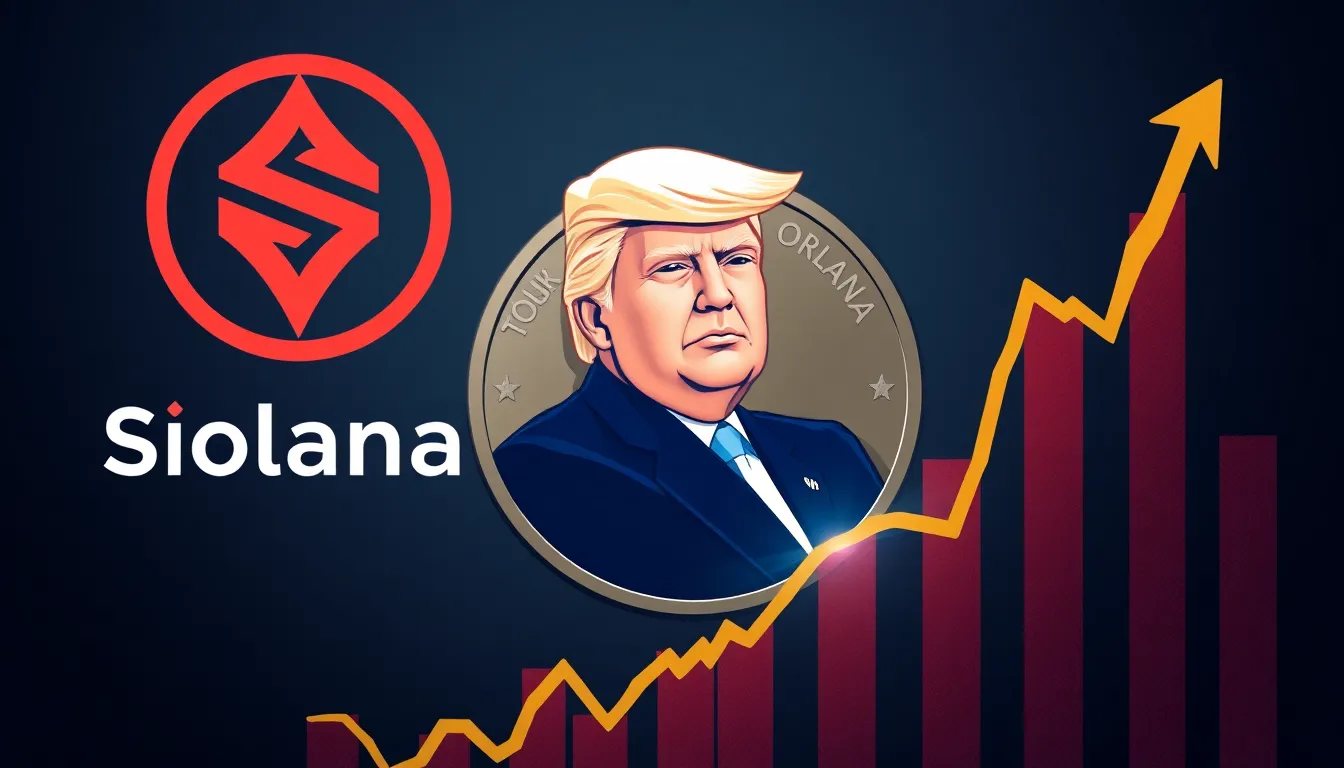
The $TRUMP meme coin, a digital asset launched on the Solana blockchain and directly associated with Donald Trump, has become a focal point for discussions surrounding cryptocurrency, politics, and ethics. Its rapid ascent in market value, coupled with significant controversy, offers a compelling case study in the dynamics of meme coins and their intersection with political influence. The coin’s journey from its inception to its market fluctuations, exclusive perks, and the ensuing ethical debates provides a complex narrative that warrants close examination.
This exploration delves into the multifaceted aspects of the $TRUMP meme coin, from its initial launch and unprecedented market surge to the exclusive benefits offered to its top holders and the subsequent criticisms regarding its ethical implications and potential for foreign influence. We will navigate the financial windfalls, the shifting valuations, the legislative responses, and the industry’s reactions, providing a comprehensive overview of this unique and contentious digital asset.
Unveiling the $TRUMP Meme Coin Phenomenon
The emergence of the $TRUMP meme coin, intrinsically linked to former U.S. President Donald Trump and operating on the Solana blockchain, marked a significant moment in the cryptocurrency landscape. Launched on January 17, 2025, just days before Trump’s inauguration, its initial quiet debut raised suspicions of it being a potential scam. However, Trump’s subsequent confirmation on social media platforms quickly validated the project, positioning it as the “only official Trump meme” with a logo featuring a cartoon of Trump celebrating a past survival. Despite a disclaimer asserting it was not an investment or political entity, the coin’s trajectory was anything but neutral, quickly demonstrating its volatile and speculative nature.
The Genesis and Initial Market Surge of $TRUMP
The $TRUMP meme coin’s inception on January 17, 2025, was strategically timed, occurring a mere three days before Donald Trump’s presidential inauguration. This timing, coupled with an initial lack of a formal announcement, fueled widespread speculation and concern among the public and financial analysts, with many questioning its legitimacy and potential association with the President-elect. However, these doubts were swiftly allayed when Trump himself took to major social media platforms, including X and Truth Social, to announce and promote the cryptocurrency. The official meme coin website declared it the “only official Trump meme,” further solidifying its connection to the former president. The coin’s emblem, a distinctive cartoon image of Trump triumphantly raising his fist, was a direct nod to his survival of an assassination attempt in July 2024. Crucially, a disclaimer was included, stating that the coin was not intended as an investment opportunity or a security, nor was it affiliated with any political campaign or government entity. Nevertheless, the terms of the offering also included clauses that prohibited buyers from participating in class-action lawsuits against the project and asserted indemnity against any potential claims, hinting at the complex legal and ethical landscape surrounding the venture. Trump’s active promotion of the coin on the very night of its initial coin offering (ICO), during a concurrent “Crypto Ball” event, underscored its high-profile launch and immediate integration into his political and public persona.
The Astonishing Post-Launch Valuation
Following its official launch, the $TRUMP meme coin experienced an unprecedented surge in value, skyrocketing by over 300% within a single day. This remarkable ascent propelled it to become the 19th most valuable cryptocurrency globally within a mere two days. The total trading value neared an astonishing $13 billion, with a staggering $29 billion in total trades recorded. These figures were based on an individual token valuation of $64 for the initial 200 million tokens released during the ICO. The New York Times, in its analysis, highlighted the significant potential wealth accumulation for Trump, estimating that his affiliates controlled an additional 800 million tokens. Hypothetically, these holdings could be worth upwards of $56 billion, potentially elevating Trump’s net worth to an estimated $63.8 billion, positioning him among the world’s wealthiest individuals. This dramatic valuation underscored the immense speculative interest and rapid capital inflow characteristic of meme coin markets, amplified by the direct association with a prominent political figure.
Financial Windfalls and Shifting Valuations
A comprehensive analysis by the Financial Times in March 2025 revealed that the $TRUMP crypto project had generated substantial revenue, netting at least $350 million. This figure was broken down into $314 million from direct token sales and an additional $36 million from associated fees. However, the financial narrative took a more complex turn by July 2025. Reporting from New York indicated a significant depreciation in the president’s holdings, with their value reportedly dropping to approximately $93 million. This stark contrast was further complicated by The New Yorker’s reporting in August 2025, which suggested that holdings managed through a partnership were still potentially valued in the billions of dollars, and that actualized profits from the meme coin had reached $385 million. These divergent reports highlighted the inherent volatility and the opaque nature of valuations within the meme coin ecosystem, where reported figures and market realities could fluctuate dramatically, often influenced by market sentiment, further promotions, and the underlying speculative dynamics.
Exclusive Perks and Market Reactions
In a move that generated significant buzz and further market activity, the $TRUMP meme coin initiative announced exclusive perks for its top holders in April 2025. The top 220 investors were offered the opportunity to have dinner with the President, while the top 25 holders were promised a special VIP tour of the White House. This announcement had an immediate and dramatic impact on the coin’s market performance, triggering a price jump of over 50%. Beyond the direct financial implications, the initiative also sparked concerns about potential insider trading and market manipulation. Analyses indicated that leaked information about these exclusive promotions allowed certain traders to position themselves advantageously, placing bets on the coin’s price movements before the news was publicly disseminated. Interviews and statements from some buyers revealed their explicit intention to acquire the coins or enter the dinner contest with the specific goal of influencing U.S. policy through their access to President Trump. This underscored the perceived utility of the meme coin not just as a speculative asset, but as a potential gateway to political access and influence.
The China Connection and Market Dynamics
Adding another layer of complexity to the $TRUMP meme coin narrative, a significant transaction involving a China-linked entity came to light on May 13, 2025. GD Culture Group, a company with reported ties to China, minimal revenue in 2024, and an affiliation with TikTok, announced its intention to purchase $300 million worth of Bitcoin and $TRUMP. This acquisition was to be funded through proceeds from a stock sale to an undisclosed entity based in the British Virgin Islands. This marked the first documented instance of a China-linked firm investing in Trump’s cryptocurrency. The timing of this announcement was particularly notable, as TikTok was facing potential bans in the U.S., a decision that President Trump had repeatedly postponed. This confluence of events raised questions about geopolitical influences and the potential for foreign entities to leverage cryptocurrency investments for strategic or political objectives, further complicating the already contentious landscape surrounding the $TRUMP meme coin and its relationship with the administration.
Investor Behavior and Incentive Mechanisms
The $TRUMP meme coin’s market dynamics were further illustrated by investor behavior and the implementation of incentive mechanisms to manage coin holdings. Reports from The New York Times indicated that on May 12, a significant number of investors, at least twenty, chose to sell or transfer their $TRUMP holdings. This period saw the bidding process for exclusive perks create profitable opportunities for some investors. One notable instance involved an investor identified only as “Noah,” who acquired $2.2 million in $TRUMP before the contest commenced and subsequently sold it at the contest’s conclusion, realizing a profit exceeding $950,000. In an apparent effort to counteract the sell-off trend and encourage continued investment, the social media channels associated with $TRUMP announced a reward system. Investors who retained their coins were promised a unique non-fungible token (NFT) called a “Trump Diamond Hand,” along with the accumulation of reward points. This strategy aimed to foster loyalty and stabilize the coin’s value amidst fluctuating market sentiment. Furthermore, a portion of investors were able to attend the exclusive dinner by engaging in short selling of $TRUMP, effectively covering their attendance costs through trading fees. The collective expenditure by the contest winners was reported by NBC News to be approximately $394 million. However, a subsequent development saw references to a White House tour being removed from the dinner’s official website, with a senior Trump administration official clarifying that no official tour was being conducted for the investors, adding a layer of ambiguity to the promised incentives.
The Infamous Trump Meme Coin Dinner
The highly publicized dinner event, characterized as “black-tie optional,” took place at the Trump National Golf Club in Sterling, Virginia. This gathering was not without controversy, as it was met with protests from individuals condemning the event and its implications. Attendees were treated to a menu that included premium dishes such as filet mignon and pan-seared halibut, alongside a “Trump organic field green salad.” Accounts from attendees described the security as relatively light. President Trump’s presence was notably limited, and his speech, delivered from behind a podium adorned with the presidential seal, lasted approximately fifteen to twenty minutes. Following the main event, a private afterparty was held at the Washington Marriott Capitol Hill, hosted by Memecore. Among the notable attendees who received substantial gifts were four of the highest-paying investors, including Justin Sun, who were presented with Tourbillon watches valued at $100,000 each. This event marked Sun’s return to the United States following a period of investigation by the U.S. Attorney’s Office for the Southern District of New York in 2021.
Global Investors and Strategic Acquisitions
An in-depth analysis conducted by The New York Times in conjunction with blockchain data firm Nansen revealed a significant international presence among the investors. A notable portion of the attendees hailed from Australia and Singapore, underscoring the global appeal and reach of the $TRUMP meme coin. MemeCore, a cryptocurrency firm, secured the second-highest position by investing $19.3 million. Cherry Hsu, the company’s chief business officer, expressed her interest in engaging with President Trump and other attendees to share MemeCore’s vision and mission. The top-ranking investor was identified as an account associated with HTX, widely believed to be linked to Justin Sun. Javier Selgas, the CEO of Fr8Tech, communicated to the Securities and Exchange Commission his intention to invest $20 million in $TRUMP, with the explicit aim of influencing President Trump to reduce tariffs on goods imported from Mexico. Furthermore, GD Culture Group, a publicly traded entity with Chinese ties, announced its successful procurement of $300 million to invest in Bitcoin and $TRUMP, funded by a stock sale to an entity in the British Virgin Islands. Through meticulous cross-referencing of guest lists and social media activity, The New York Times later identified many of the event’s attendees, including prominent figures like Justin Sun and former basketball player Lamar Odom.
Ethical Storms and Political Ramifications
The highly anticipated dinner, alongside the broader $TRUMP meme coin initiative, ignited a firestorm of ethical concerns and highlighted potential avenues for foreign influence within the U.S. political sphere. Wyoming Senator Cynthia Lummis and Senate Majority Leader Thom Tillis publicly voiced their apprehension regarding the dinner and its implications. Donald Sherman, director of Citizens for Responsibility and Ethics in Washington (CREW), characterized the event as “one of the most blatant and appalling instances of selling access to the presidency.” Massachusetts Senator Elizabeth Warren sharply criticized the gathering, labeling it an “orgy of corruption,” while Oregon Senator Jeff Merkley described it as “the Mount Everest of American corruption.” These strong statements from lawmakers and ethics watchdogs underscored the profound ethical questions raised by the intersection of high-stakes cryptocurrency investment, presidential access, and potential foreign interests, amplifying calls for greater transparency and accountability in political finance and digital asset markets.
Legislative Responses and Public Scrutiny
In direct response to the controversies surrounding the $TRUMP meme coin and the associated dinner, legislative actions were initiated to address potential conflicts of interest and ethical breaches. Senator Jeff Merkley, alongside Senate Minority Leader Chuck Schumer, introduced a bill specifically designed to prohibit senior executive branch officials, including the President, their family members, and other high-ranking officials, from profiting from cryptocurrency investments. Merkley also formally requested that the Office of Government Ethics conduct a thorough investigation into the dinner event. Simultaneously, the Senate Homeland Security Permanent Subcommittee on Investigations expanded its ongoing inquiry into cryptocurrency businesses involving Trump to encompass the dinner. Representative Jamie Raskin, serving as the ranking member of the House Committee on the Judiciary, launched his own inquiry into the matter. The public discourse surrounding the event was further amplified by late-night television hosts Jimmy Fallon and Jimmy Kimmel, who humorously yet critically addressed the attendees and the perceived corruption associated with the dinner, reflecting broader public sentiment and concern.
Concentrated Ownership and Profit Distribution
The ownership structure of the $TRUMP meme coin revealed a significant concentration of tokens within entities closely associated with Donald Trump. According to the coin’s official website, the majority of the tokens, specifically 80 percent of those remaining after the initial coin offering (ICO), were held by two Trump-owned companies: CIC Digital LLC and Fight Fight Fight LLC. The precise personal profit derived by Trump through this ownership arrangement remained somewhat ambiguous. The release of these substantial holdings was structured for gradual distribution over a three-year period, suggesting a long-term strategy for managing and potentially liquidating these assets. This concentrated ownership model raised questions about transparency and the ultimate beneficiaries of the meme coin’s market performance, particularly given the significant sums involved and the direct link to the presidency.
Regulatory Classifications and Jurisdictional Debates
The classification of meme coins like $TRUMP within the existing regulatory framework presented a complex challenge for governing bodies. The Securities and Exchange Commission’s (SEC) Division of Corporation Finance issued a statement indicating that meme coins, due to their inherently speculative nature and lack of tangible utility, did not meet the criteria to be classified as securities under federal law. This stance suggested a hands-off approach regarding their regulation as traditional financial instruments. Conversely, officials from the Commodity Futures Trading Commission (CFTC) asserted their jurisdiction over such digital assets, arguing that meme coins should be considered commodities. The CFTC emphasized its authority to prosecute instances of market manipulation, signaling a potentially more interventionist regulatory stance aimed at preserving market integrity and protecting investors from fraudulent activities within the rapidly evolving cryptocurrency space.
- 01
- 02
- 03
- 04
Industry Reactions and Criticisms of $TRUMP
The introduction of the $TRUMP meme coin elicited strong reactions from various figures within the cryptocurrency industry, many of whom expressed concerns about its impact on the sector’s credibility. Several crypto executives and prominent investors voiced opinions that Trump’s involvement, particularly his dual role as a promoter of crypto policies and a direct beneficiary of a highly speculative asset, undermined the industry’s reputation. They pointed to the inherent conflict of interest, where policy decisions could directly influence the value of his personal holdings. The coin’s launch and subsequent performance were frequently likened to a “rug pull,” a scenario where a project’s creators abandon it after attracting investment, leaving early investors with significant losses. The situation was further exemplified by the launch of the $MELANIA token, associated with Trump’s wife, just 48 hours after $TRUMP, which even some ardent supporters found excessive, with one reportedly urging Trump to dismiss the advisor responsible for the suggestion. Erik Voorhees, a well-respected Bitcoin investor, publicly criticized the coin, deeming it “stupid and embarrassing,” reflecting a sentiment of disapproval regarding the project’s speculative nature and ethical implications.
Critiques on Utility and Perceived Value
A significant point of contention surrounding the $TRUMP meme coin was its perceived lack of intrinsic utility beyond its potential to generate wealth for Donald Trump. Unlike other digital assets such as Bitcoin, which serves as a store of value, or certain tokens that grant holders voting rights in corporate decisions, $TRUMP offered no such tangible benefits. It did not even provide ownership of a digital cartoon featuring Trump. Essentially, the coin was characterized as a novelty, a form of entertainment, and a mechanism for supporters to contribute financially to Donald Trump. David D. Kirkpatrick’s commentary in The New Yorker succinctly captured this sentiment, describing the coin’s appeal as the “fun… of paying Donald Trump.” This perspective highlighted the unique position of the meme coin as a cultural and political statement rather than a conventional financial instrument, relying heavily on the personality and brand of its namesake for its perceived value.
Ethical Scrutiny and Constitutional Concerns
The $TRUMP meme coin venture faced intense scrutiny from ethics experts and government watchdog organizations. A primary concern revolved around the potential for foreign governments to acquire the coin, thereby channeling funds directly to Donald Trump and potentially contravening the U.S. Constitution’s foreign emoluments clause. Critics argued that such a mechanism could provide a pathway for special interests and foreign powers to exert undue influence over the President. This raised fundamental questions about the integrity of the presidency and the mechanisms through which political power could be influenced or compromised by financial transactions, particularly those involving speculative digital assets and international actors.
Condemnation from Ethics Professionals and Industry Insiders
The launch of the $TRUMP meme coin drew sharp condemnation from a spectrum of ethics lawyers and industry professionals. Adav Noti, director of the Campaign Legal Center, and Jordan Libowitz, vice president for communications at Citizens for Responsibility and Ethics in Washington, were among the prominent ethics advocates who voiced strong disapproval. Nick Tomaino, a former executive at Coinbase, characterized Trump’s ownership and the timing of the cryptocurrency’s release as “predatory.” Anthony Scaramucci, a former White House Communications Director and current crypto investor, delivered a scathing critique, likening the coin’s launch to “Idi Amin level corruption” and asserting that it was detrimental to the broader cryptocurrency industry. He articulated a concern that the coin effectively provided an accessible channel for individuals worldwide to financially support the President of the United States with ease. Brendan Fischer, deputy executive director at Documented, noted the suspicious timing of the launch, occurring immediately after Trump’s campaign concluded and just prior to his official inauguration, when he would become fully subject to federal ethics regulations. By early February 2025, as the coin’s value experienced a significant decline, the circumstances surrounding its creation and promotion led to widespread ethical condemnation, heightened concerns over conflicts of interest, and prompted calls from members of Congress for formal investigations into the matter.
Allegations of Market Manipulation and Investor Losses
Analysts widely characterized the $TRUMP meme coin’s trajectory as a classic “pump and dump” scheme, deeming the entire venture a “disaster.” A detailed forensic analysis commissioned by The New York Times provided compelling evidence of market manipulation and significant investor losses. The analysis concluded that approximately 813,294 wallets suffered a combined loss of $2 billion through trading the coin. Concurrently, the president’s company and its partners reportedly profited around $100 million from trading fees generated during the coin’s active trading period. Fortune magazine’s reporting highlighted the stark imbalance, stating that “Less than three weeks after its release, President Donald Trump’s memecoin has produced more losers than winners. For every dollar in trading fees the Trump crypto creators raked in, investors lost $20.” This data painted a clear picture of a highly skewed financial outcome, where the majority of participants experienced substantial financial detriment while the creators and associated entities reaped significant profits.
The MEME Act: A Legislative Response to Financial Endorsements
In direct legislative response to the controversies surrounding presidential and high-ranking official endorsements of financial assets, Representative Sam Liccardo, a Democrat representing Silicon Valley, introduced the Modern Emoluments and Malfeasance Enforcement Act, colloquially known as the MEME Act. This proposed legislation aims to prohibit the President, senior White House officials, members of Congress, and their immediate family members from issuing or endorsing any financial asset. Significantly, the MEME Act includes a provision for a private right of action, empowering any individual harmed by the purchase of such assets to seek legal recourse. This contrasts with existing regulations like the Hatch Act, which primarily focuses on political activity during work hours. The introduction of the MEME Act signifies a legislative effort to create clearer boundaries and accountability mechanisms concerning the intersection of political office and financial market participation, particularly in the volatile realm of digital currencies.
The $Melania Token and Associated Controversies
Following the launch of the $TRUMP meme coin, a related cryptocurrency, the $Melania token, was introduced on January 19, 2025, by Melania Trump, wife of Donald Trump. The orchestration of the $Melania token launch, and later the $Libra cryptocurrency scandal, involved Hayden Davis, who admitted to participating in “sniping” these tokens. Sniping, in this context, refers to an illegal practice akin to front-running, where illicit advantages are gained by executing trades before others. This admission by Davis shed light on potentially manipulative practices within the meme coin space, further intensifying scrutiny on the broader ecosystem of Trump-associated digital assets. The involvement of individuals with a history of controversial activities in the launch and management of these tokens raised serious questions about due diligence, ethical conduct, and regulatory oversight.
Liquidity Draining and Market Manipulation Concerns
Further revelations emerged in April 2025 regarding the $Melania token, as blockchain data provider Bubblemaps reported significant sell-offs and potential market manipulation. The analysis indicated that Hayden Davis extracted approximately $2 million from the $Melania token’s liquidity pools. Subsequently, $1 million of these funds were channeled to exchanges through single-sided liquidity provisions. This action, often associated with practices that can destabilize a token’s value and benefit the party initiating the withdrawal, raised concerns about the integrity of the token’s market. Such liquidity draining maneuvers can leave smaller investors vulnerable, as they may be unable to exit their positions before the token’s value plummets. The findings from Bubblemaps contributed to the growing body of evidence suggesting a pattern of questionable financial activities surrounding meme coins linked to prominent political figures.
Summary of $TRUMP Meme Coin Dynamics
The $TRUMP meme coin represented a unique intersection of cryptocurrency, political branding, and speculative finance, sparking widespread debate and scrutiny. Its launch, valuation, and subsequent market activities highlighted significant ethical considerations, potential conflicts of interest, and regulatory challenges. The concentrated ownership, exclusive perks tied to political access, and criticisms regarding its lack of utility underscored the complex nature of meme coins when directly associated with public figures. The venture also prompted legislative responses aimed at preventing similar situations in the future. The narrative surrounding $TRUMP, including its financial performance, investor reactions, and the controversies it generated, serves as a case study in the evolving landscape of digital assets and their entanglement with politics and public perception.
Key Takeaways on Meme Coin Governance and Ethics
The $TRUMP meme coin saga offers critical lessons regarding governance and ethics in the digital asset space, particularly when intertwined with political figures. Key takeaways include the paramount importance of transparency in ownership and funding, the potential for conflicts of interest when politicians endorse or profit from speculative assets, and the need for robust regulatory frameworks to address market manipulation and protect investors. The venture’s reliance on hype and association rather than inherent utility also underscores the speculative nature of many meme coins. Furthermore, the ethical concerns raised regarding foreign influence and the selling of political access highlight the vulnerability of such systems to exploitation. Ultimately, the $TRUMP experience emphasizes the necessity of clear ethical guidelines and stringent oversight to maintain public trust and ensure the integrity of both political institutions and financial markets.
|
Aspect |
Details |
|
Coin Name |
$TRUMP (Meme Coin) |
|
Blockchain Platform |
Solana |
|
Launch Date |
January 17, 2025 |
|
Initial Supply |
1 Billion Coins |
|
ICO Release |
200 Million Coins |
|
Remaining Holdings |
800 Million Coins (Owned by Trump Companies) |
|
Initial Market Value |
Over $27 Billion (Less than 24 hours post-ICO) |
|
Trump’s Holdings Valuation |
Over $20 Billion (Initially) |
|
Projected Net Profit (March 2025 Analysis) |
At least $350 Million |
|
Key Criticisms |
Conflicts of Interest, Selling Political Access, Potential Foreign Influence, Lack of Utility, “Pump and Dump” Allegations |
|
Exclusive Perks for Holders |
Dinner with President, VIP White House Tour (Top Holders) |
|
Legislative Response |
MEME Act introduced to ban presidential/official endorsement of financial assets |
|
Related Cryptocurrency |
$Melania Token (Launched by Melania Trump) |
|
Ethical Concerns Raised By |
Ethics Experts, Government Watchdogs, Lawmakers, Crypto Industry Figures |
From our network :
- Clear GPU Memory After TensorFlow Model Training: A Comprehensive Guide
- Anthropic’s Claude AI: New Voice Mode and Enhanced Memory
- Capturing SQL Server PRINT Output in Delphi Applications using ADOConnection
- Penguin Guano’s Surprising Impact on Antarctic Climate
- First Confirmed Solitary Black Hole Roaming the Cosmos
- Can Natural Numbers Be Partitioned by Equal Digit Sum?
- 01
- 02
- 03
- 04
- 05
- 06
- 07
- 08
0 Comments